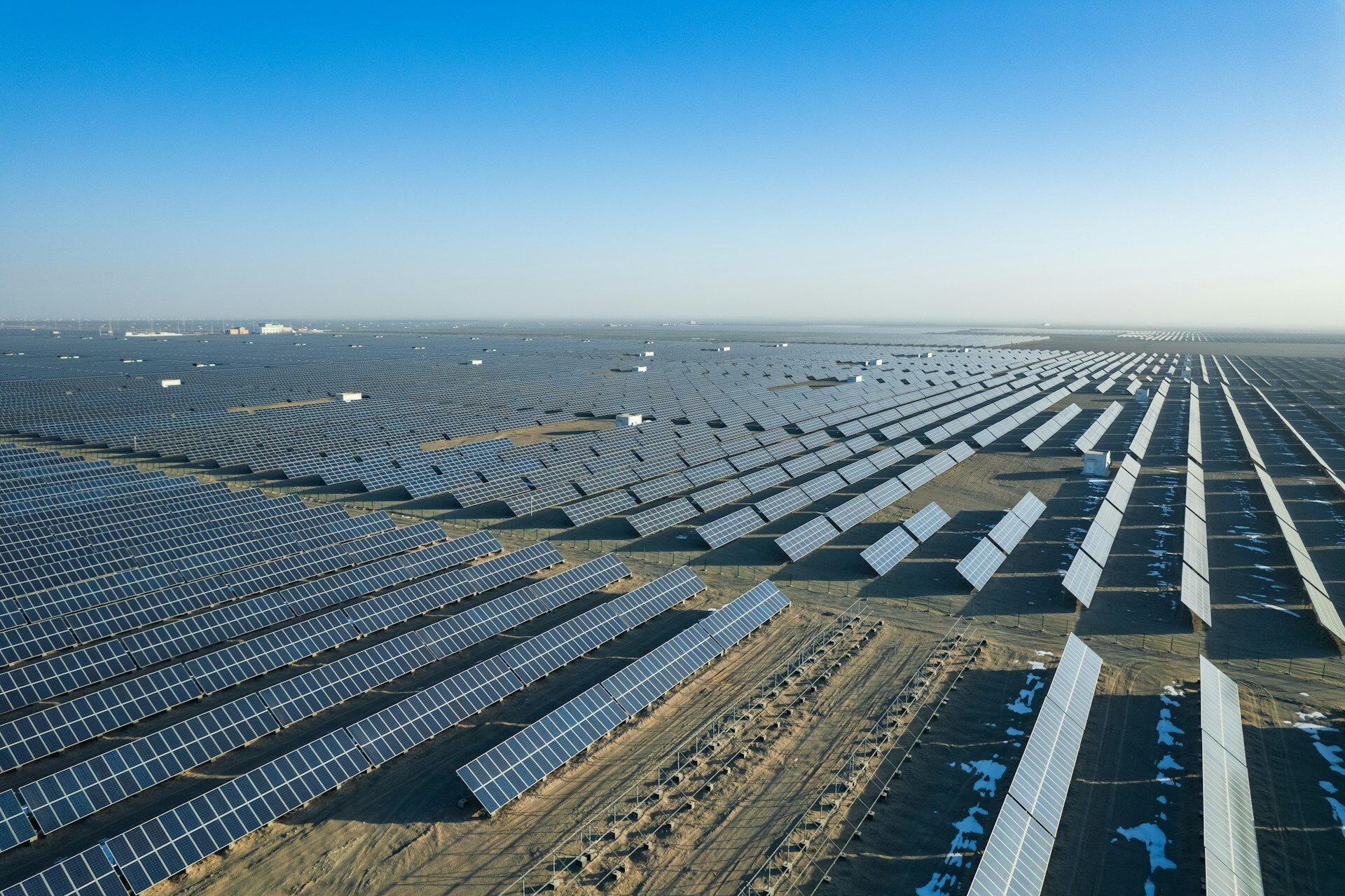
Solar glass is tough, but it’s not scratch-proof — and a scratched panel loses output permanently. The good news: damage almost always comes from how panels are cleaned, not from cleaning itself. Follow a few rules and you get clean glass with zero risk. Here they are.
1. Use a soft, non-abrasive brush
Never use stiff industrial bristles, scouring pads or anything abrasive. Purpose-made solar brushes use soft synthetic filaments set into a smooth plate. Match the bristle to the job: softer nylon for gentle dry-dust sweeping, and a firmer PBT for wet cleaning of stubborn dirt — firm enough to lift grime, still safe on glass.
Soft rollers, low contact pressure: the glass — and its anti-reflective coating — is what you are protecting.
2. Don’t dry-scrub stuck-on dirt
The single biggest cause of scratches is pushing dry, gritty dirt or dried droppings across the glass. If it won’t sweep off dry, add water — water floats the grit away so the brush glides instead of grinding. Save dry cleaning for loose, powdery dust.
3. Watch your water quality
Hard tap water dries into mineral spots that look like dirt and tempt more scrubbing. On sensitive sites, feed the brush with reverse-osmosis (RO) water for a spot-free finish and less rework.
4. Skip the pressure washer
High-pressure jets can force water past the frame seals and stress the cells. Gentle, brush-fed water at low pressure cleans just as well without the risk.
5. Avoid extreme temperatures
Don’t clean panels that are scorching hot in midday sun — cold water on hot glass causes thermal stress. Early morning or evening is safer and more effective.
How our equipment is built for this
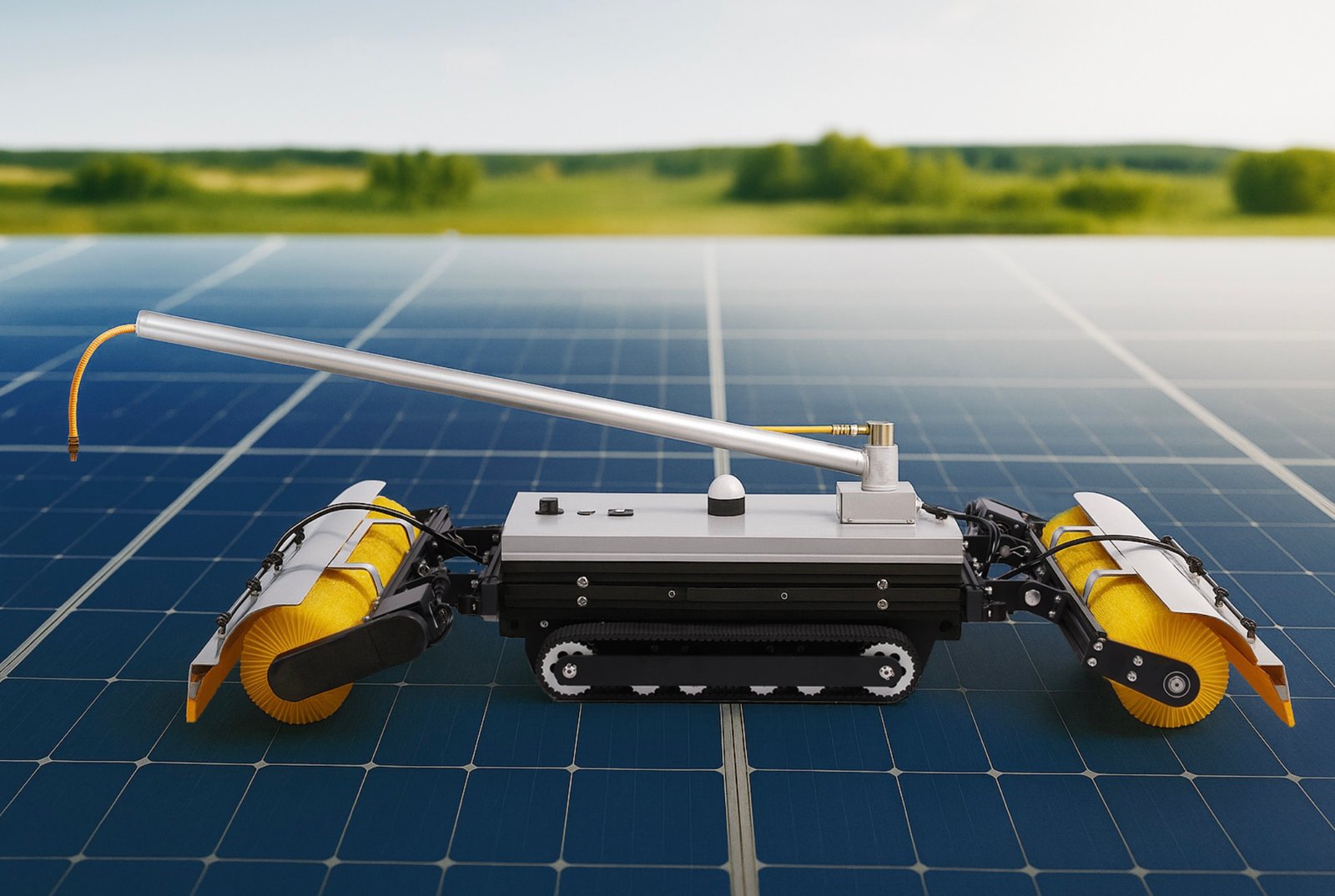
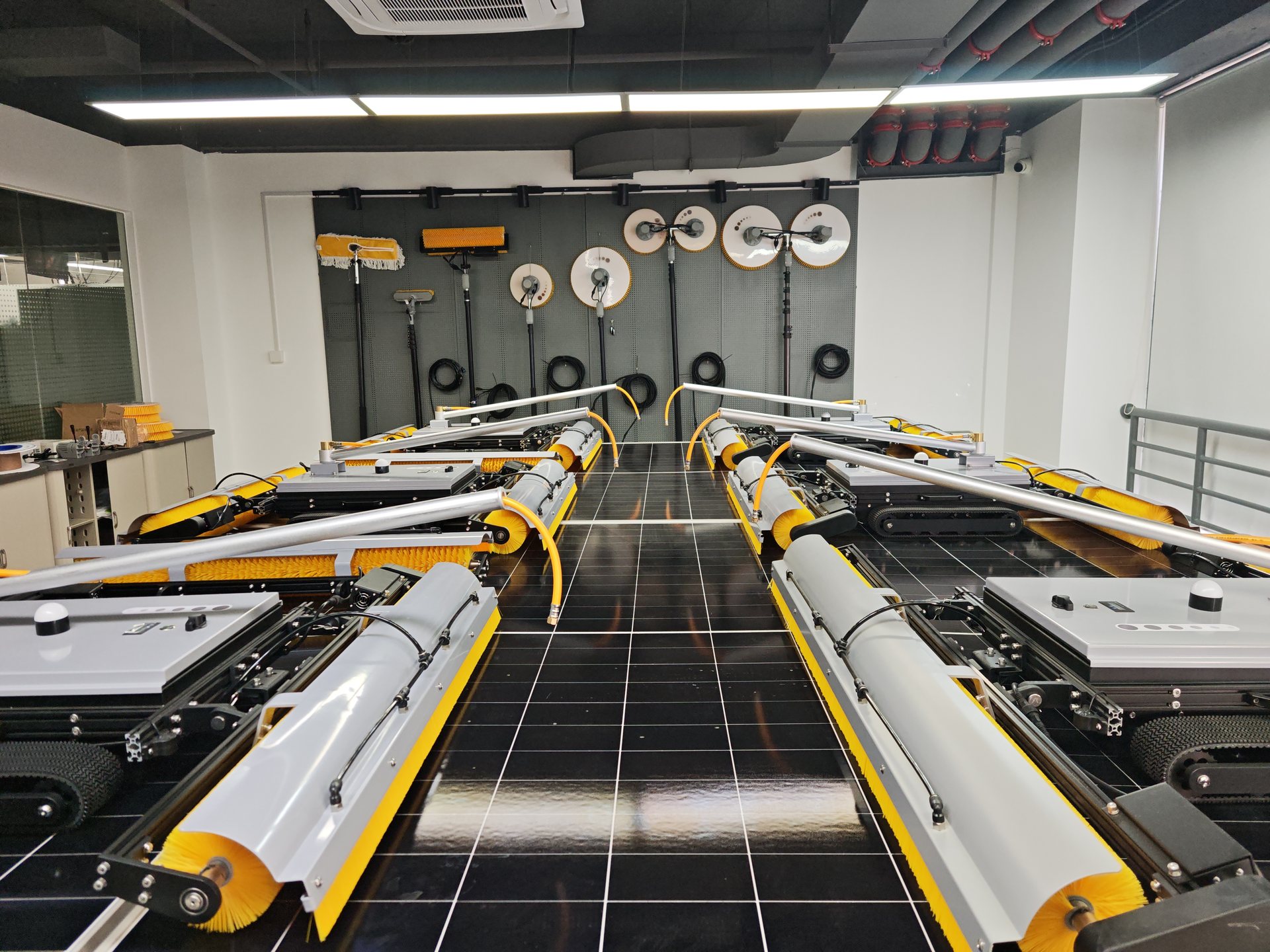
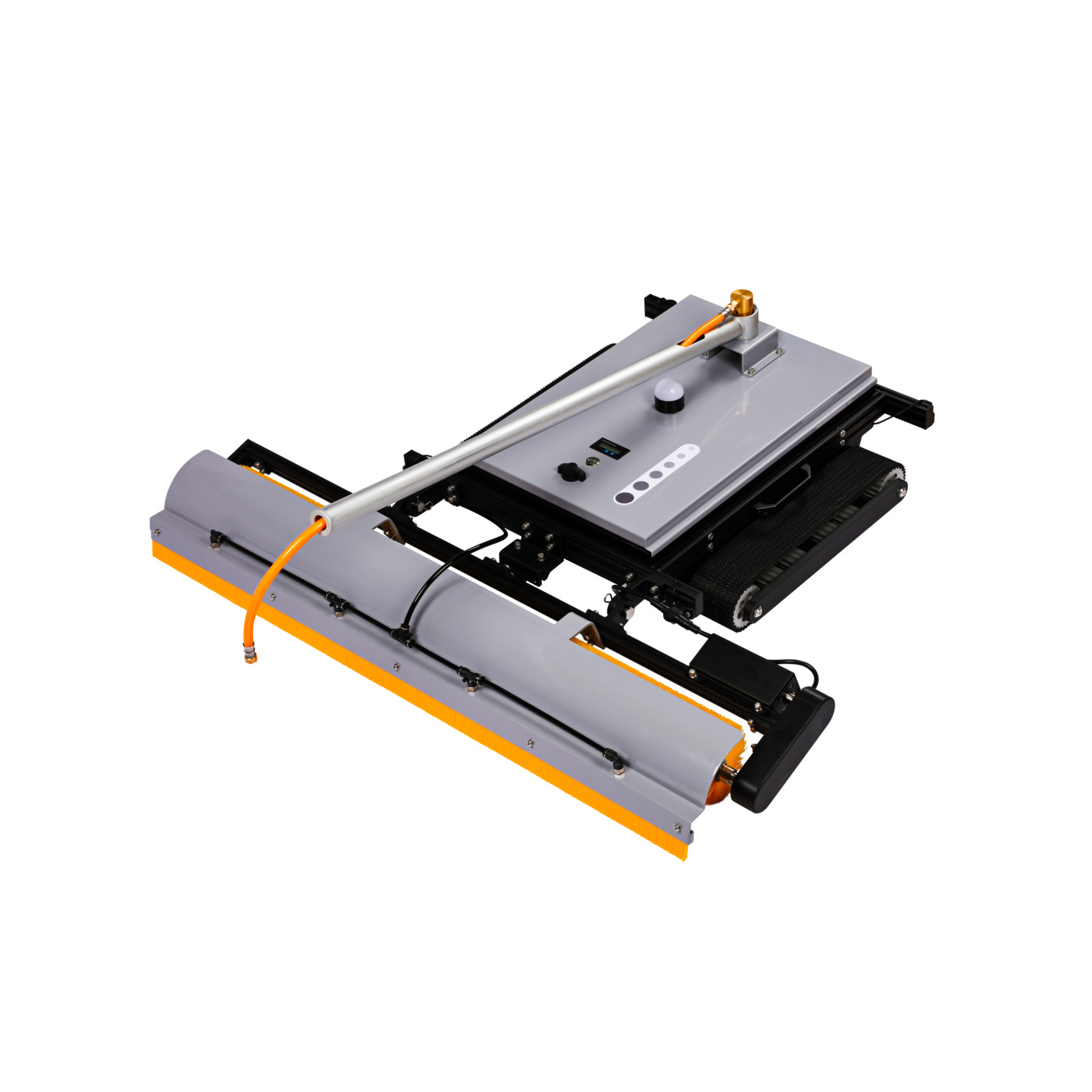
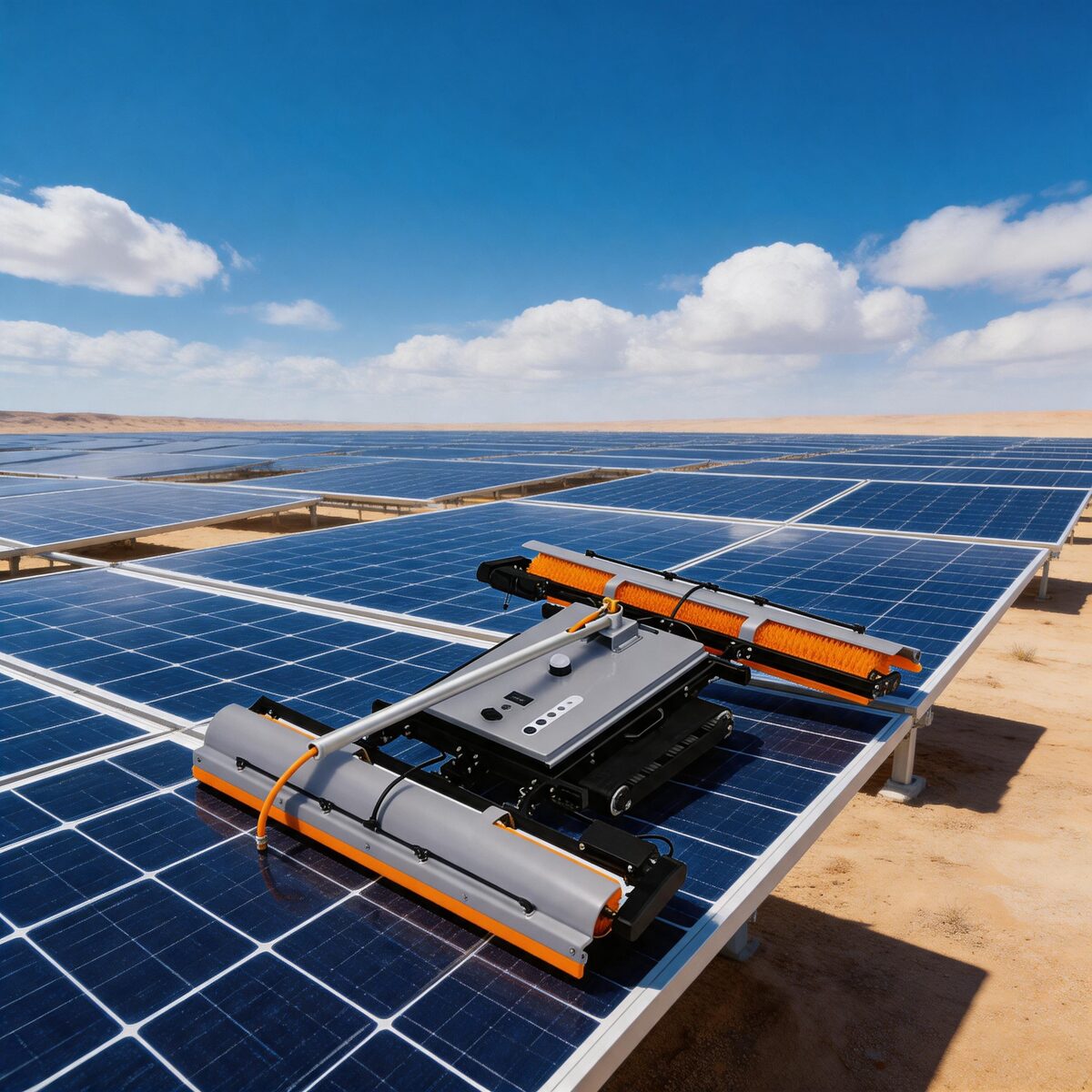
Our machines are designed around exactly these rules: soft nylon brushes for dry dust and firmer PBT for wet work, tufted (not woven) brush plates that won’t trap grit, water-fed heads that keep the glass wet, and insulated, non-conductive handles for safe work near live panels. Our crawler robot even carries both brush types for dry and wet cleaning.
Want help choosing a method and brush that’s safe for your panels? Tell us about your site and we’ll spec it.
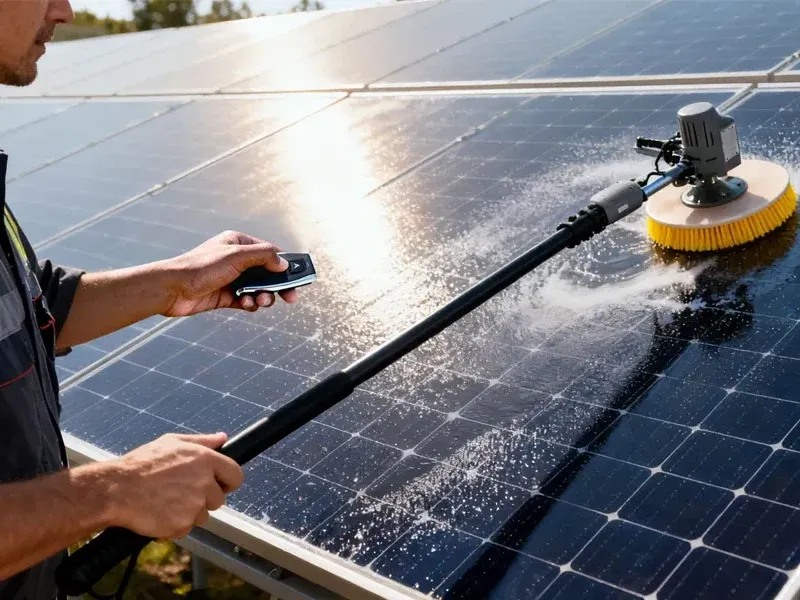
Purpose-built for glass: soft rollers, metered water, no high-pressure jet anywhere near the module.
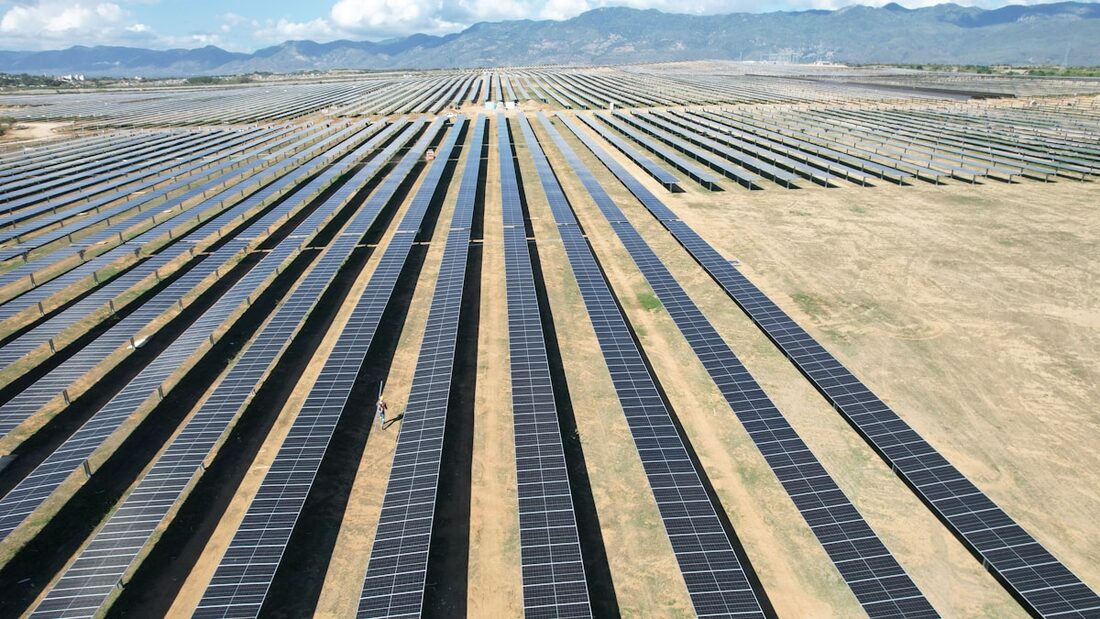
In deserts and high-dust regions, soiling isn’t a nuisance — it’s one of the biggest losses on the plant. Panels can lose a quarter or more of their output between rains, and the dust piles back on within days. The challenge is cleaning often enough, with little or no water, and without scratching the glass. Here’s what actually works.
Why dusty regions are different
Soiling is severe and fast — with little rain to rinse the glass, dust rebuilds quickly, so losses climb through the whole dry season.
Water is scarce and precious — trucking clean water to a remote site is expensive, so waterless or low-water methods win.
Fine, abrasive dust — desert sand is gritty; dragging it across the glass with the wrong brush risks micro-scratches.
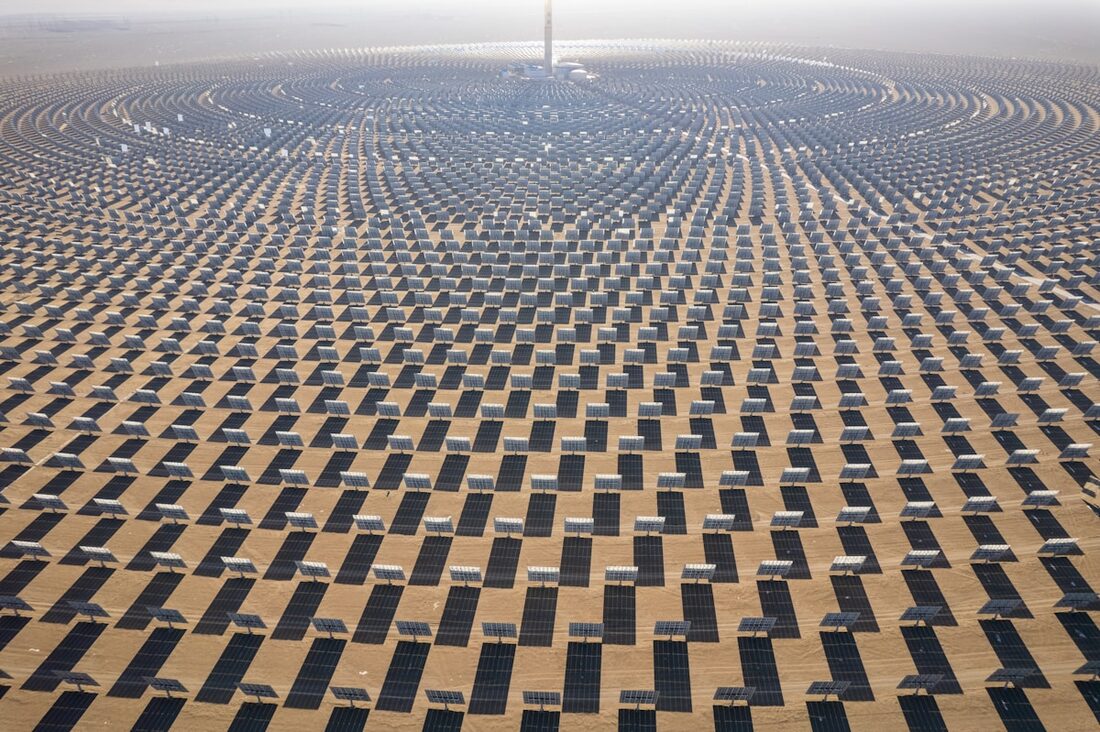
In arid regions there is no rain to reset the glass — soiling returns within days.
What works in the desert
Dry cleaning first — for loose, powdery dust, a roller or a robot sweeps it off with no water at all, using soft bristles that lift dust without grinding it in.
Water only when needed — for baked-on grime or bird droppings, spot-clean with water and a harder PBT brush. Feeding the brush with RO (reverse-osmosis) water leaves a spot-free finish, because there are no dissolved minerals to dry on the glass — important where hard groundwater is the only supply.
Clean on data, not the calendar — because soiling swings so much, an optical soiling sensor tells you exactly when a clean pays for itself, so you don’t waste water and labour cleaning too early.
Off-grid ready — lithium and dual-power machines run where there’s no mains at the row.
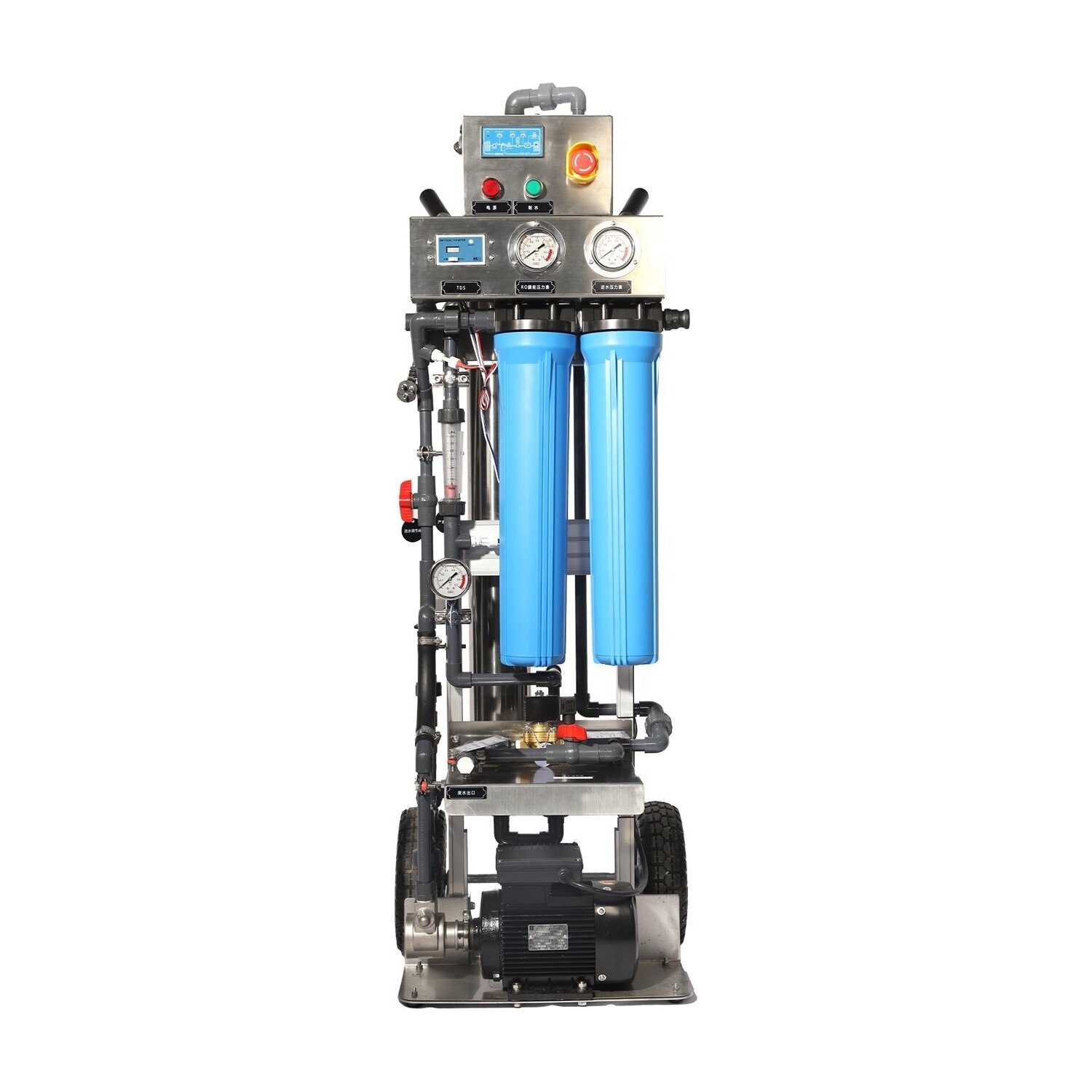
Hard local water leaves spots. An RO unit turns it into rinse water that dries clean.
Built for these conditions
Our equipment is rated for −20 to 50 °C operation, offers soft nylon brushes for gentle dry sweeping and harder PBT for wet work, and pairs with RO water treatment for spot-free results. It’s the combination high-dust markets across the Middle East and beyond actually need.
Cleaning a site in a hot, dusty or water-scarce region? Tell us your conditions and we’ll spec a low-water cleaning setup for it.
When you buy solar cleaning equipment, you’re really choosing who stands behind it — the company that built it, or a trader who bought it to resell. Both can sell you a machine. Only one can spec it to your site, ship you genuine spares and answer for it when something needs fixing. Here’s how to tell them apart, and why it matters for a purchase you’ll rely on for years.
How to tell who you’re dealing with
Ask one direct question: “Do you manufacture this, or resell it?” A manufacturer can talk about brush materials, motor ratings, battery cycles and tolerances without checking with someone else. A pure trader usually can’t — because they didn’t build it.
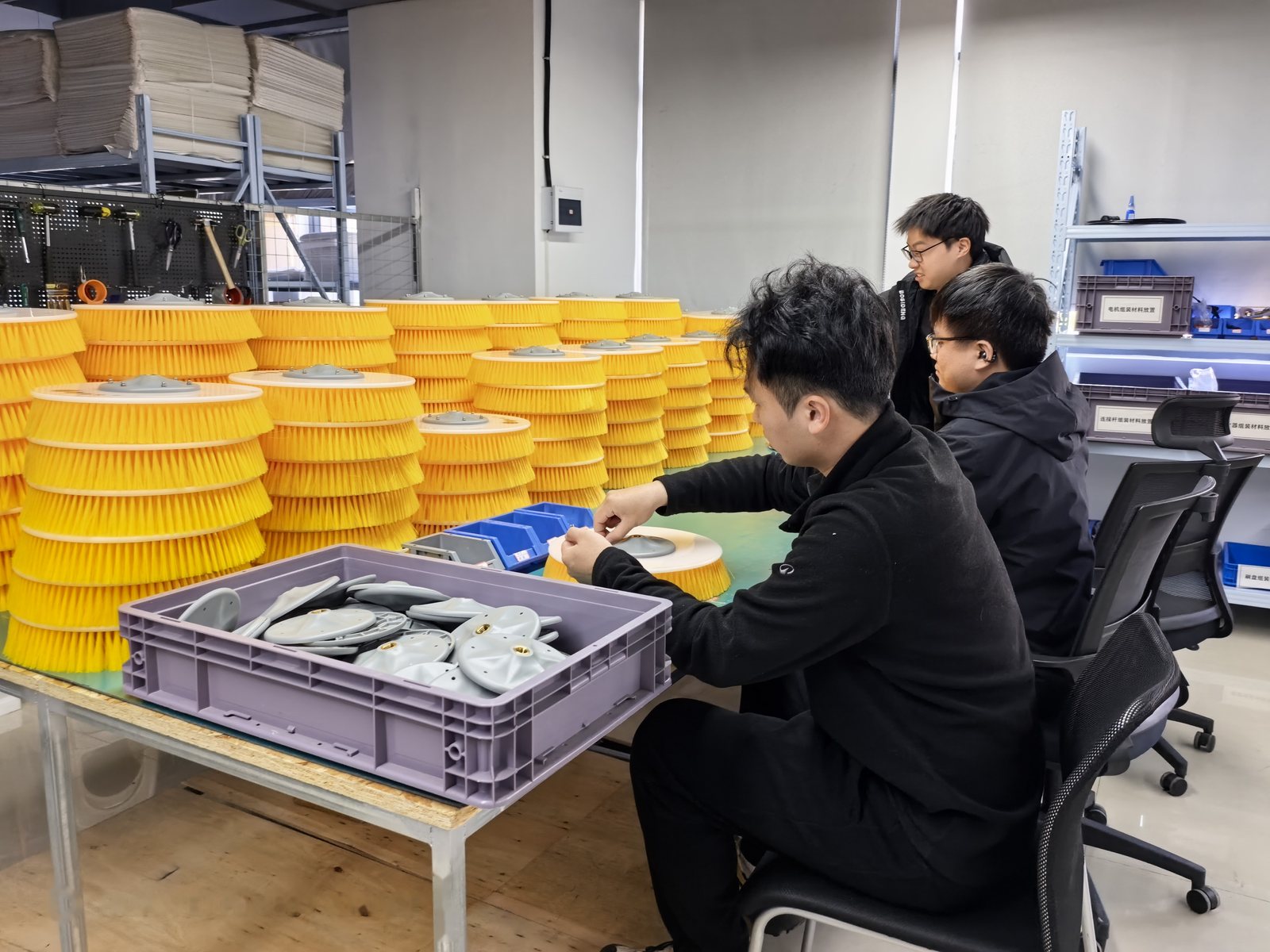
Finished machines on our own assembly line — a trader cannot show you this.
What you get from the manufacturer
Real customization — pole length, brush material, power version, plug and voltage set to your market and site, not a fixed catalogue.
Genuine spare parts — the exact brushes, batteries, chargers and hoses that fit, for years — not a guess after the trader has moved on to another product.
One accountable source — design, production, testing and after-sales under one roof, so warranty and support don’t get lost in a chain of resellers.
Honest advice — a maker of the full range can tell you when you don’t need the expensive machine; a trader is limited to whatever they happen to stock.
Our factory and showroom in Xiamen — customers are welcome to audit before they order.
Where a trader can still make sense
A local distributor who holds stock, handles import and offers on-the-ground service is genuinely useful — as long as they’re backed by a real manufacturer for parts and warranty. The setup to avoid is a middleman with no factory behind them: markup without accountability.
Our position
We’re a manufacturer that builds the full range of solar cleaning equipment in-house and sells direct to overseas projects — robots, electric brushes and manual tools, all from one source. That’s why we can match the machine to your site, ship the right plug and voltage, and stand behind it long after the sale. More about who we are, or tell us about your project.
The honest answer is: it depends on the machine and your site — so the better question isn’t “what does it cost,” it’s “how fast does it pay back.” For most commercial and utility sites, mechanised cleaning earns its price back through the labour it saves and the generation it recovers. Here’s how to think about both.
What drives the price
Type of machine — a long-reach electric brush is a fraction of the cost of a crawler robot; a robot costs more but replaces far more labour.
Reach and width — longer poles, wider brushes and larger robots cost more but cover more per hour.
Power version — mains, lithium or dual-power; battery packs add cost but unlock off-grid and remote sites.
Brush and customization — brush material, plug and voltage for your country, and any OEM/branding.
Because these vary site to site, we quote per project rather than list a single price — it’s the only way to give you an accurate number instead of a misleading one.
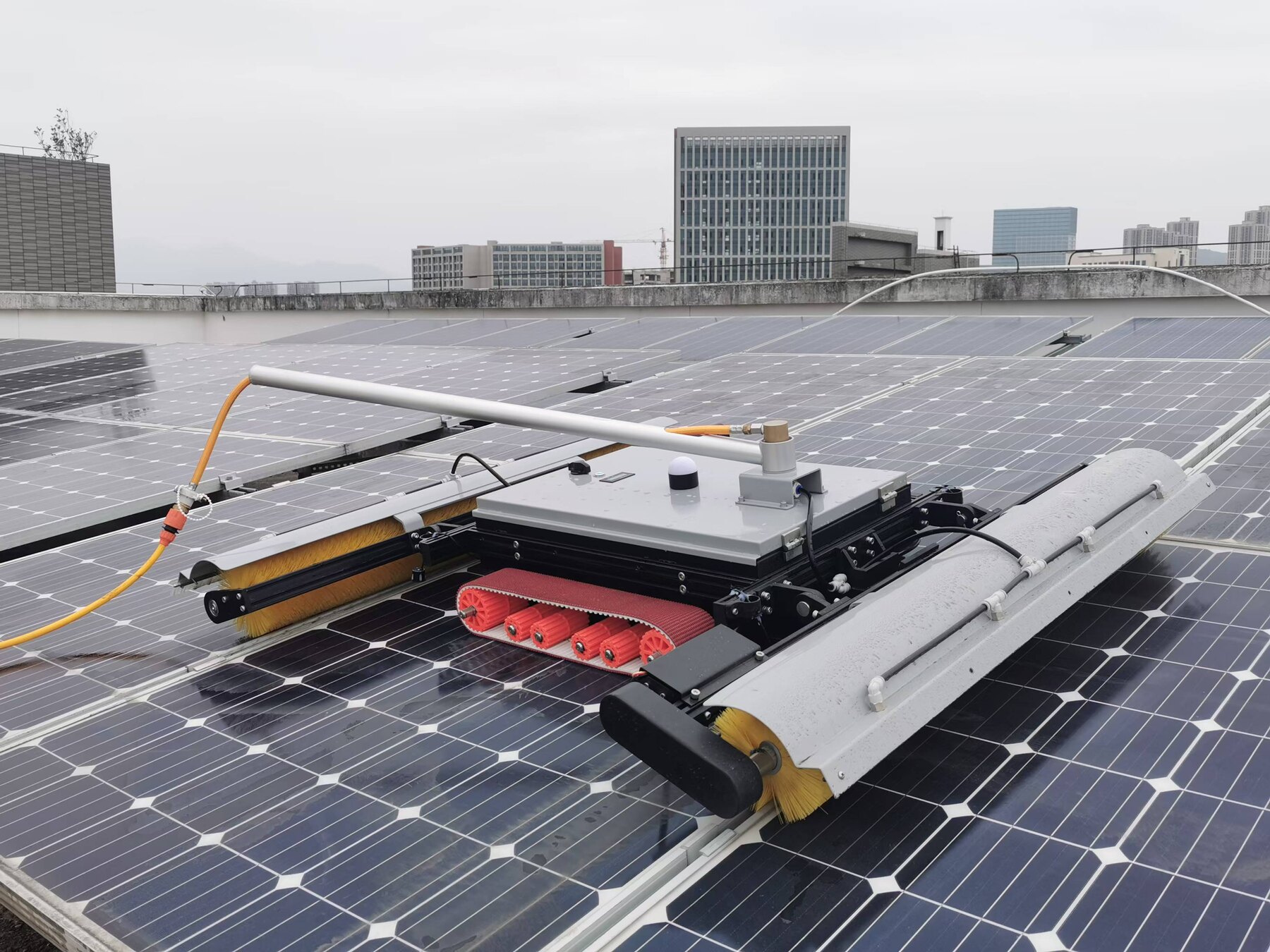
Drive system, waterproofing, anti-fall protection and controls — not just size — set the price.
What drives the payback
The price is only half the equation. The return comes from three places:
Labour saved — usually the biggest line. A wide electric brush lets one person cover far more area per hour than a hand tool; a robot covers the most and runs with minimal supervision.
Yield recovered — clean panels generate more. Where soiling is heavy, the recovered output alone can justify regular cleaning (see how much soiling really costs).
Safety and risk — keeping crews off high roofs removes fall risk and the costs that come with it.
On larger, dustier or higher sites, those returns add up quickly — which is why the machine that looks more expensive up front is often the cheaper choice over a year of cleaning.
Payback comes from labour saved on every cleaning cycle, not from the sticker price.
Get a real number for your site
Tell us your site size, module tilt, power situation and location, and we’ll recommend a machine and give you an accurate quote — usually within 24 hours. Request a quote →
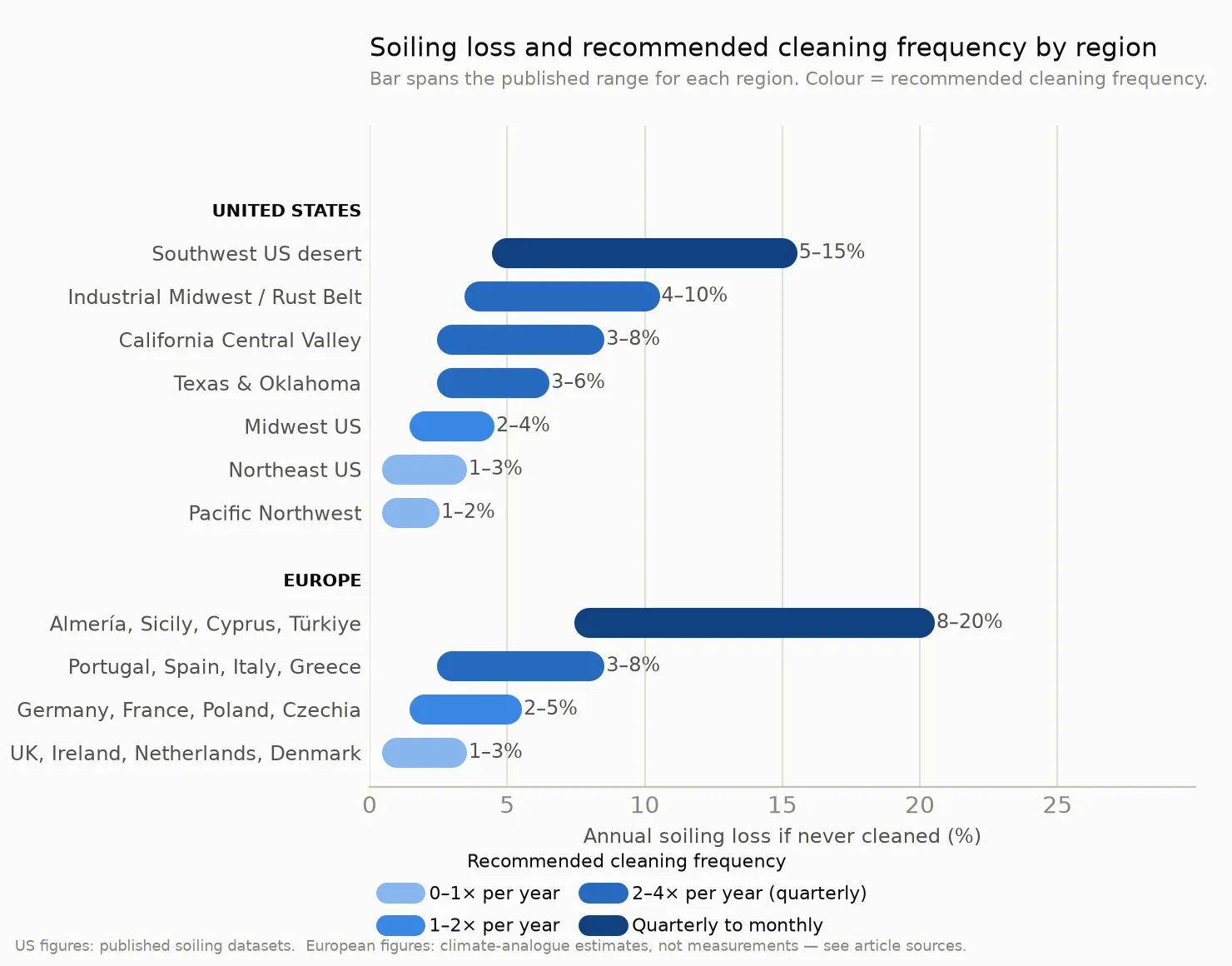
Dry or agricultural — Texas, California Central Valley, Spain, Italy, Portugal, Greece
4–8%
2–4× per year (roughly quarterly)
Desert / high dust — Southwest US, Almería, Sicily, Cyprus, interior Türkiye
8–25%
Quarterly to monthly
If your site falls in the lower half of that table, the question stops being “how often should I clean?” and becomes “how do I afford to clean that often?” That is an equipment and labour question, not a scheduling one — see section 5 below.
This article covers cadence only. For a general maintenance framework — soiling mechanics, method selection, and inspection routines — see our earlier guide, Practical Tips for Solar Panel Cleaning and Maintenance. That article is a broad best-practices overview; this one goes deep on scheduling and cost, and is intended to be read alongside it.
1. Why frequency is a climate question, not a calendar question
“Twice a year” is the industry’s default rule of thumb. It is an average across all climates, which makes it wrong in both directions for most individual sites.
Soiling accumulation is driven by five factors:
Atmospheric dust load. Arid and semi-arid regions accumulate dust several times faster than humid ones.
Rain frequency. Rain removes loose dust and little else — see section 3.
Local sources. Agriculture, construction, unpaved roads, industrial emissions, and coastal salt spray all add residue that rain will not lift.
Module tilt. Low tilt retains dust longer. Heavy soiling concentrates along the lower edge of each row.
Dew and humidity. Overnight condensation cements dust into a film. This is the mechanism behind the cemented soiling discussed in section 2.
Two sites in the same country can legitimately require 0.5 and 4 cleanings per year — a spread of roughly 8×. That is why we recommend measuring rather than scheduling by habit, and why any single-number frequency recommendation should be treated with suspicion unless it states the climate it applies to.
2. Soiling rates by region
United States
Region
Monthly loss
Annual (uncleaned)
Pacific Northwest
0.05–0.15%
1–2%
Northeast US
0.08–0.20%
1–3%
Midwest US
0.15–0.35%
2–4%
Texas / Oklahoma
0.20–0.50%
3–6%
California Central Valley
0.25–0.65%
3–8%
Industrial / Rust Belt
0.30–0.80%
4–10%
Southwest US desert
0.45–1.20%
5–15%
Europe
Region
Estimated monthly loss
Estimated annual (uncleaned)
UK, Ireland, Netherlands, Denmark
0.05–0.15%
1–3%
Germany, France, Belgium, Poland, Czechia
0.10–0.30%
2–5%
Portugal, Spain, Italy, Greece, southern France
0.25–0.70%
3–8%
Almería, Sicily, Cyprus, interior Türkiye
0.60–1.80%
8–20%
Methodological note — read this before citing the European figures. The US monthly figures are drawn from published soiling and cleaning-economics datasets (see Sources). The European figures are climate-analogue estimates, produced by mapping each region onto the closest measured climate band, because site-level soiling data is far less publicly available in Europe than in the US. We publish them as estimates, not measurements, and we will replace them with measured values as we obtain them. If you operate in Europe and have measured data, we would like to hear from you.
Reference points outside these markets
Region
Monthly loss
Annual (uncleaned)
Northern India
0.70–1.50%
8–18%
Middle East / North Africa
0.80–2.50%
10–25%
Published annual soiling loss ranges for the US and Europe. European figures are climate-analogue estimates, not site measurements. Colour indicates the recommended cleaning frequency for each band.
Reconciling the ranges you will see elsewhere
Published soiling-loss figures vary widely — you will see 2%, you will see 30%, and both may be correct. The apparent contradiction comes from three different measurement bases:
Time-based (the tables above) — loss accumulated over a period under local conditions.
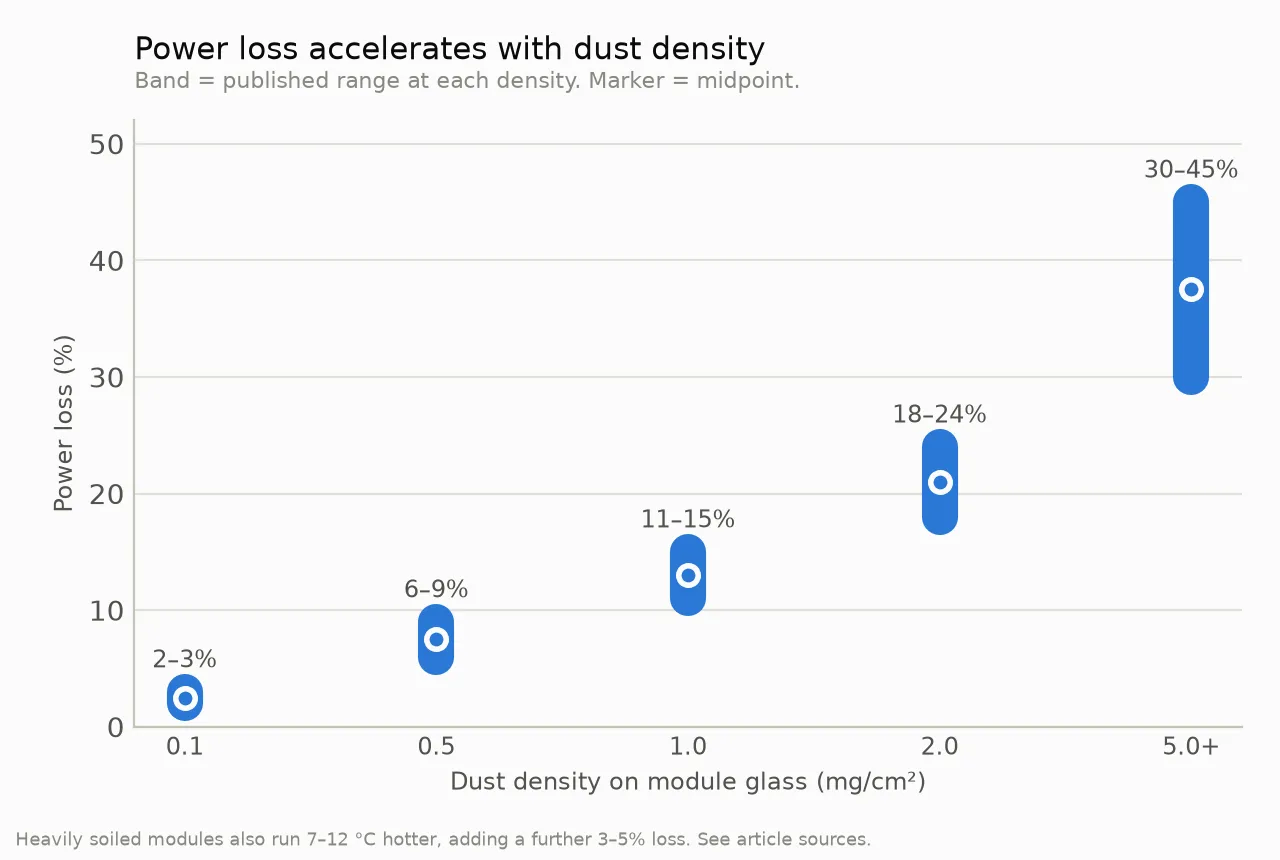
Density-based (the table below) — loss as a function of how much dust is actually on the glass.
Event-based — loss measured immediately after a discrete event such as a dust storm.
Dust density
Power loss
0.1 mg/cm²
2–3%
0.5 mg/cm²
6–9%
1.0 mg/cm²
11–15%
2.0 mg/cm²
18–24%
5.0+ mg/cm²
30–45%
Power loss as a function of dust density on module glass. The relationship is near-linear at light loads and steepens sharply as deposition thickens. Heavily soiled modules also run 7–12 °C hotter, adding a further 3–5% loss.
The low single-digit percentages describe lightly soiled arrays in temperate climates. The 20–30% figures that circulate for “dirty panels” describe heavy, prolonged accumulation or post-storm conditions. Both are describing real states — they are just not the same state. When you compare sources, check which basis is being used before concluding that one of them is wrong.
Secondary thermal effect. Heavily soiled modules run 7–12 °C hotter than clean ones, which adds a further 3–5% efficiency loss on top of the optical loss. Soiling costs you twice: less light reaches the cell, and the cell converts what does arrive less efficiently.
3. Why rain is not a cleaning strategy
Rain removes an estimated 40–75% of loose dust, and almost none of the residue that drives the larger losses:
Pollen — adhesive and seasonal; largely rain-resistant once dried.
Bird droppings — acidic, and capable of etching the anti-reflective coating if left in place.
Soot and diesel particulate — oily; binds to glass.
Cemented dust — dust that has cycled repeatedly through dew and drying, forming a chemically bonded film rather than a loose layer. Cemented soiling in hyper-arid regions has been measured at up to 9.8% annual energy loss.
Rain also creates a failure mode of its own. On a partially soiled array, rain can wash dust into streaks and concentrate it along the lower edge of each row. Because that produces non-uniform soiling, the result is not merely a proportional output loss — it is cell mismatch and, in the worst case, hot spots.
The “self-cleaning array” idea holds only in climates with frequent, heavy rain and low dust load — roughly the first row of the table in section 2. Everywhere else, rain is a partial credit at best, and a reason to inspect rather than a reason to skip cleaning.
4. How to tell whether your own array needs cleaning
Three methods, in increasing order of usefulness.
Method 1 — Visual inspection
Cheapest and least reliable. You can see bird droppings and heavy dust. You cannot see the 3–5% film that accumulates before soiling becomes obvious — by which point you have already lost weeks of production.
Method 2 — Output comparison
Compare current production against a known-clean baseline at equivalent irradiance and temperature. Reliable only when irradiance is normalised. See the warning in section 6 — this is the single most common source of bad cleaning data.
Method 3 — In-line soiling sensor
An optical-scattering sensor mounted at module plane continuously reports how clean the glass is, and can trigger cleaning automatically when a threshold is crossed. This is the only method that scales: it removes guesswork, produces a time-stamped record, and lets you clean on condition rather than on a calendar.
One clarification that matters, because this class of instrument is widely misdescribed: a soiling sensor measures PV-glass cleanliness — it does not measure energy loss. Energy loss also depends on irradiance, module behaviour, and system conditions. What the sensor gives you is a direct, repeatable reading of the variable you can actually act on. Our A60 PV Dust Measuring Instrument works on this principle: optical scattering, measurement range 100%–50%, accuracy 1% across 100%–90% and 4% across 80%–50%, stability 1% per year, response time under one second, RS485 Modbus with optional 4G, IP67, no moving parts, and no on-site calibration.
Whatever instrument you use, validate its readings against the site plan before you rely on them, and treat the number as a cleanliness indicator rather than a revenue figure.
5. Where manual cleaning stops being economic
Cleaning economics are size-dependent, and the crossover is sharper than most operators expect:
Segment
Cleaning cost basis
Break-even soiling level
Residential, DIY
~$60/yr
~2% — usually worth doing
Residential, professional crew
~$300/yr
~8% — rarely worth it
Commercial, professional crew
$0.04–0.06/W/yr
15–25%
Utility-scale, robotic
below truck-based O&M
standard practice in high-dust regions
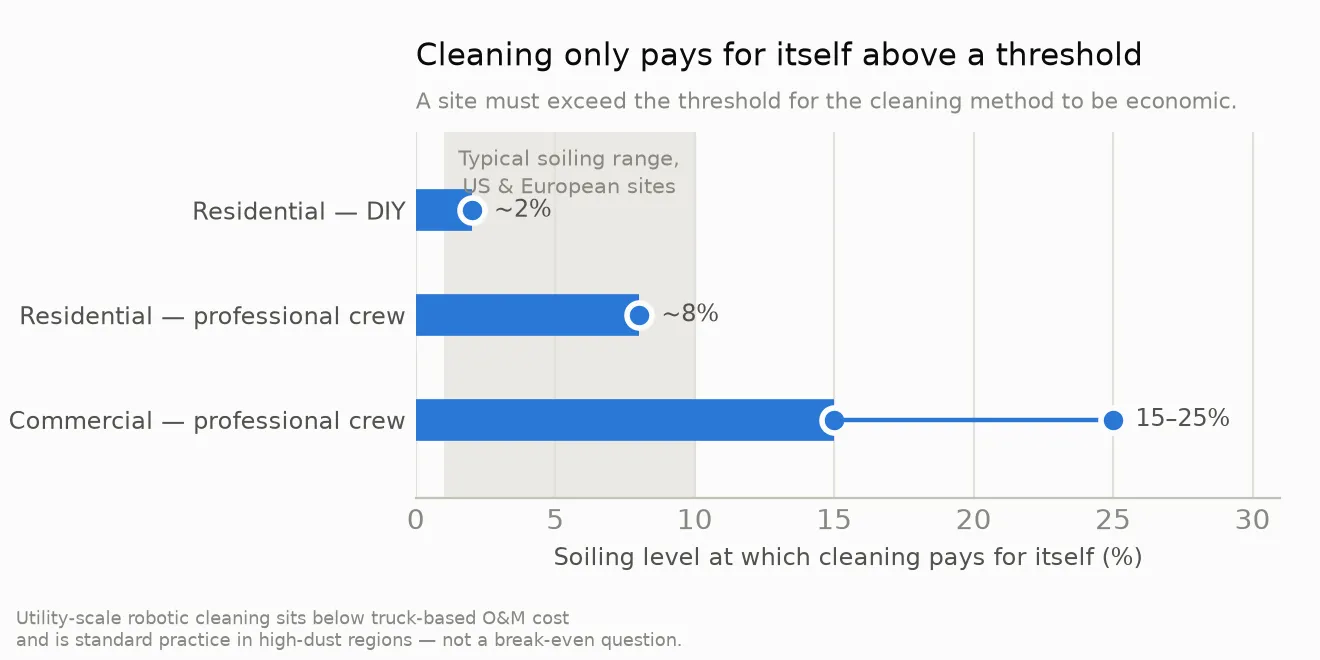
The soiling level at which each cleaning method pays for itself. The shaded band marks the typical soiling range of US and European sites. Residential professional cleaning requires roughly 8% soiling to break even — a level most residential sites never reach.
The pattern is clear. For residential systems in moderate climates, professional cleaning rarely pays for itself — labour cost per panel is too high relative to the energy recovered. As arrays grow larger and soiling gets heavier, the arithmetic flips hard:
Utility-scale waterless cleaning robots vs. manual labour: payback in 1–3 years
Residential and small-commercial robots: 8–15 years — usually not justified
The practical consequence: once your required frequency passes roughly quarterly, manual cleaning becomes both expensive and difficult to schedule, and the bottleneck shifts from whether to clean to how to clean that often with the crew you have. At that point the question is an equipment question. We cover the selection logic in our solution paths by site type, and the hardware in the R1 crawler robot and R2 crawler robot pages.
All figures above are USD and are drawn from published cleaning-economics datasets (see Sources). They are benchmarks for order-of-magnitude planning, not quotations. Labour rates, water cost, and access difficulty vary enough by region that any real cleaning decision should be costed against your own site.
6. How to validate a cleaning result
Most published “we cleaned the array and output rose by X%” claims are not measurable as stated, because they compare two different days. Two consecutive days can differ by 20–40% in yield on weather alone. Attribute that to cleaning and you have built a case on noise.
To produce a result that survives scrutiny, use one of the following, in descending order of strength:
Same-day before/after. Read output in the morning, clean, read again in the afternoon at comparable irradiance. Irradiance conditions are largely controlled, so the comparison is defensible.
Multi-day averaging. Average three to five days before cleaning and three to five days after. Weather noise is reduced, though not eliminated.
Irradiance-normalised comparison. If you have GHI or a reference cell, normalise both periods and express the result as a performance ratio change. This is the most rigorous option and the one that supports a published claim.
Soiling-sensor readings. An optical soiling sensor gives a direct before/after cleanliness figure, independent of weather. This does not by itself demonstrate an energy gain, but it removes all ambiguity about whether the array actually got cleaner.
Two further cautions:
Check your chart axes. Monitoring dashboards auto-scale the Y-axis. A before/after pair of charts with different axis maxima will visually exaggerate or understate the difference. Fix the scale before publishing.
State the conditions. A percentage gain is meaningless without irradiance, ambient temperature, and soiling level. Publish the conditions alongside the number.
We apply this methodology to our own project reporting, including the rooftop installation documented in our Romania project case.
Frequently asked questions
How often should solar panels be cleaned in the US?
It depends on region. The Pacific Northwest needs 0–1 cleanings per year. The Southwest desert needs quarterly to monthly. Texas, California’s Central Valley, and the industrial Midwest fall between those at 2–4 times per year.
Can I just rely on rain to clean my solar panels?
No. Rain removes roughly 40–75% of loose dust and almost none of the pollen, bird droppings, soot, or cemented dust that cause the larger losses. In low-rainfall or high-dust regions, rain is not a substitute for cleaning.
Do solar panels really lose that much power from dirt?
It depends on how the loss is measured. Time-based losses range from 1–3% annually in humid climates to 10–25% in desert regions. Density-based losses range from 2–3% at 0.1 mg/cm² to 30–45% above 5 mg/cm². Post-dust-storm losses can reach 40–60%. Heavily soiled modules also run 7–12 °C hotter, adding 3–5% further loss.
How do I know when my panels actually need cleaning?
An in-line soiling sensor is the only method that scales, because it measures glass cleanliness continuously and can trigger cleaning on condition. Visual inspection misses anything below roughly 5% loss, and comparing output across different days is unreliable unless irradiance is normalised.
Is professional cleaning worth it for a home system?
Usually not in moderate climates. Residential professional cleaning costs roughly $300 per year against a break-even soiling level of about 8%, which most residential sites in the US and Europe never reach. DIY cleaning at around $60 per year breaks even at about 2%, which is why it is usually the better option at residential scale.
Does a soiling sensor tell me how much energy I am losing?
No. A soiling sensor measures PV-glass cleanliness, or soiling ratio. Energy loss also depends on irradiance, module behaviour, and system conditions. The sensor tells you how dirty the glass is — which is the variable you can act on — not what the dirt is costing you in revenue.
Should I clean my panels in winter?
Lower sun angles and snow cover change the calculation, and cleaning in freezing conditions introduces its own risks. In most of Europe and the northern US, winter is a low-yield period; the highest-value cleaning windows are late spring and late summer, after pollen and after peak dust season. Snow should be removed by other means — never by scraping.
Dry vs. wet is not a philosophy to pick once and apply everywhere — it is a question you answer by looking at what is actually on the glass. Loose surface dust and wind-blown sand brush off dry without much trouble. Bird droppings, pollen, soot film, and dust that has been cemented on by dew or a light rain will not come off dry at all, and dragging a brush across them dry mostly smears the residue around rather than lifting it.
The method mismatch cuts both ways. Use wet cleaning where dry would do and you spend water you did not need to spend. Use dry cleaning where wet is actually required, and on top of leaving soiling behind, you risk a second problem: grit dragged dry across glass behaves like loose sandpaper, and the resulting micro-scratches in the anti-reflective coating are permanent. Section 3 has the numbers on that.
1. Match the method to what is actually on the glass
The deciding factor is soil type, not site preference. A cleaning-equipment vendor comparison of wet and dry methods puts it plainly: wet cleaning “excels” at bird droppings, sticky pollen, and industrial residues, while dry methods “may struggle with sticky residues or hardened bird droppings.” Loose, uniform dust is the one category where dry genuinely competes.
Soil type
Dry cleaning
Wet cleaning
Loose dust / wind-blown sand
Removes effectively
Also effective, but uses water you may not need
Pollen / light organic film
Struggles — residue resists dry brushing
Removes effectively
Bird droppings
Struggles — tends to smear rather than lift
Required — water softens and lifts it
Soot / industrial residue
Struggles
Required
Rain-cemented or dew-cemented dust
Cannot lift once bonded to the glass
Required, may need longer dwell time
If your site only ever sees loose dust — dry, low-humidity climates with no airborne organics — dry cleaning is a legitimate option, not a compromise. Everywhere else, water is doing real chemical work (softening and lifting a bonded residue), not just rinsing.
2. Dry vs wet, side by side
Dimension
Dry cleaning
Wet cleaning
Water use
Zero
Manual hose/pole: roughly 0.1–0.5 gal (0.4–1.9 L) per panel. Metered or robotic application can cut that substantially — see note below.
Soiling it actually removes
Loose dust and sand only
Full range, including sticky and organic residue (see §1)
Glass-surface risk
Elevated without water as a lubricant — see §3 for the numbers
Lower in principle, but shifts the risk to pressure and panel temperature — see §4
Best-fit scenario
Arid/desert sites, water-restricted or freezing locations, uniform loose dust
Heavy soiling, sticky/organic residue, salt-spray coastal sites, routine maintenance where water is available
One vendor field comparison reports wet cleaning achieving roughly 2–5 percentage points better restoration of original output than dry methods on comparable soiling, and metered/robotic water application cutting consumption by up to ~90% versus manual hose washing. Both figures come from a single cleaning-equipment vendor’s own comparison rather than an independently audited study — treat them as directional, not a guarantee for your site.
3. The hidden cost of dry cleaning: micro-abrasion
Water does more in a wet clean than carry dirt away — it lubricates. Without it, any grit trapped between a brush and the glass gets dragged rather than floated, and dragged grit behaves like sandpaper. A brush manufacturer’s own guidance is blunt about the consequence for sandy sites: “dry brushing should be avoided entirely, as it grinds particles into the glass surface.” Their recommended alternative is to rinse dust off the glass before any brush makes contact, rather than pushing a dry tool across it.
The damage this causes is to the anti-reflective coating (ARC), a factory-applied layer that cannot be re-applied in the field once it is scratched or stripped — so unlike a layer of dust, it is not reversible by cleaning again.
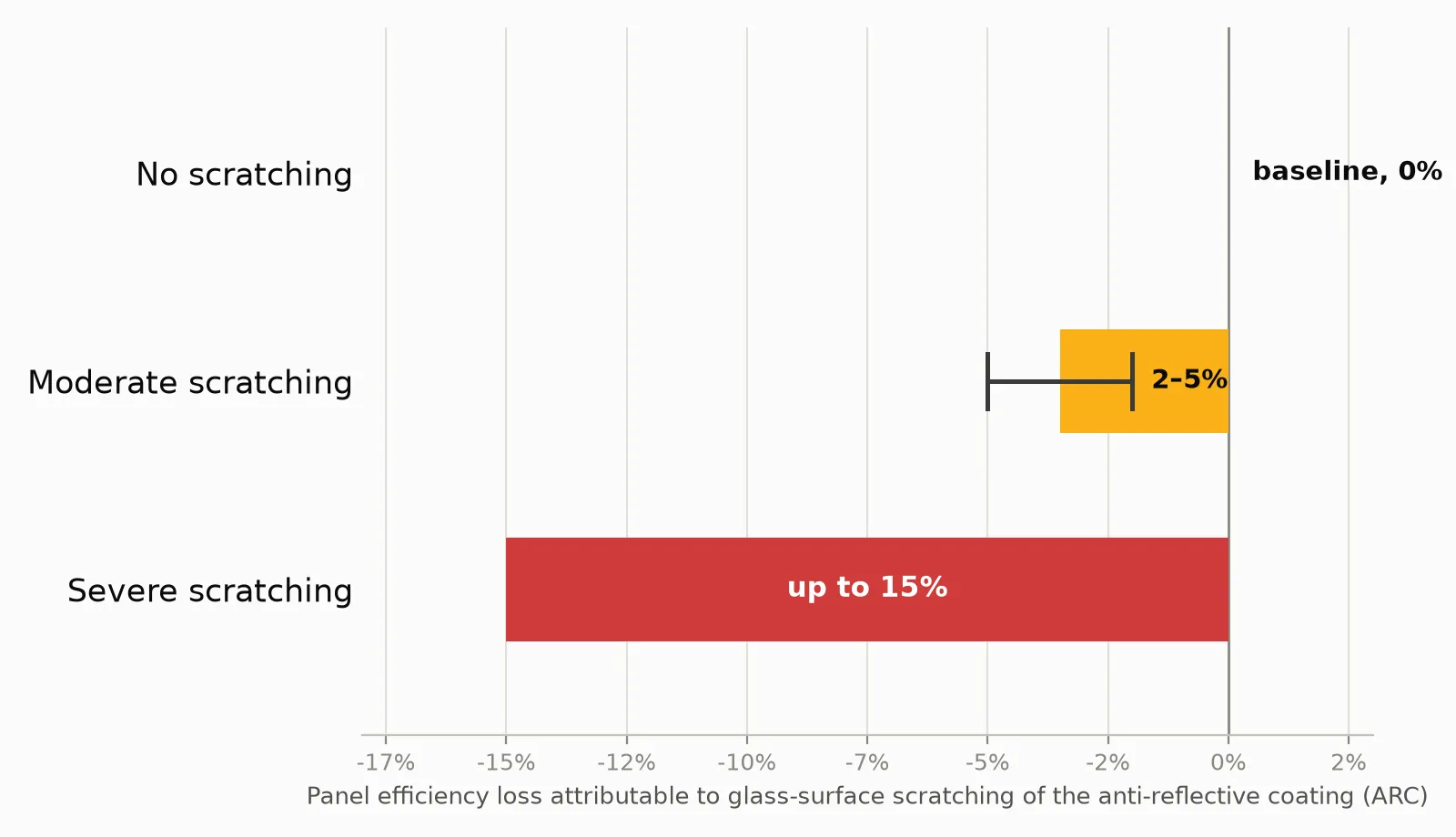
Industry-reported estimate, not an independently peer-reviewed study: moderate ARC scratching costs roughly 2–5% of panel efficiency, severe scratching up to 15%. The loss is permanent — the coating cannot be restored by further cleaning.
Wire brushes and scouring pads are the most common cause of avoidable scratching; the same source recommends soft materials and warns against abrasive tools on ARC-coated glass. If your site does need dry cleaning on loose dust, that guidance — soft rotary brush, never wire bristle or an abrasive pad — is the control that actually matters, more than the dry-vs-wet choice itself.
Our G4 roller-brush machine and R1 crawler robot both run in wet or dry mode on the same unit with a soft roller brush rather than a wire or abrasive tool. That does not make dry mode risk-free on gritty sand — it still depends on how much loose grit is on the glass — but it avoids the specific wire-brush and scouring-pad failure mode above.
4. If you clean wet, control these three variables
Water quality
Above roughly 10 ppm total dissolved solids, water leaves mineral spots on evaporation and, over repeated washes, bonds into scale that is harder to remove than the dust you started with. Most US and European municipal tap water tests well above that threshold. This is covered in full, with TDS tiers and treatment options, in Can You Clean Solar Panels With Tap Water? — if you are setting up a wet-cleaning program, read that before you read the rest of this section.
Water pressure
Module manufacturers cap wash pressure well below what a typical pressure washer puts out, and the limits are specific enough to quote directly:
Manufacturer
Maximum pressure
Trina Solar
700 kPa (~101 psi), front glass
JA Solar (ARC glass)
<690 kPa (100 psi); soft tools only
First Solar
35 bar (500 psi) at the nozzle
At Watersprayelephant, we offer a wide range of water pump products to meet the varying maximum allowable washing pressure requirements of different panels.
Panel temperature
Direct afternoon sun can bring a panel’s surface to roughly 60°C. Pouring noticeably cooler water onto glass at that temperature creates a rapid, localized temperature differential — the classic thermal-shock mechanism, the same reason a cold drinking glass can crack under hot water and vice versa — and it can stress or crack the glass.
Worth stating plainly, because it is easy to get backwards: the documented risk is cold water hitting a hot panel, not hot water hitting a hot panel. “Avoid washing with hot water on a hot panel” is not the mechanism at work here — the mismatch that causes thermal shock is between the panel’s temperature and the water’s temperature, and on a sun-heated panel the water is almost always the cooler side of that gap.
The practical fix is timing, not water temperature management: clean in the early morning or on an overcast day, when the panel has not yet heated up, rather than mid-afternoon. This control applies on top of water quality and pressure — all three are independent checks, not substitutes for each other.
5. A decision framework for your site
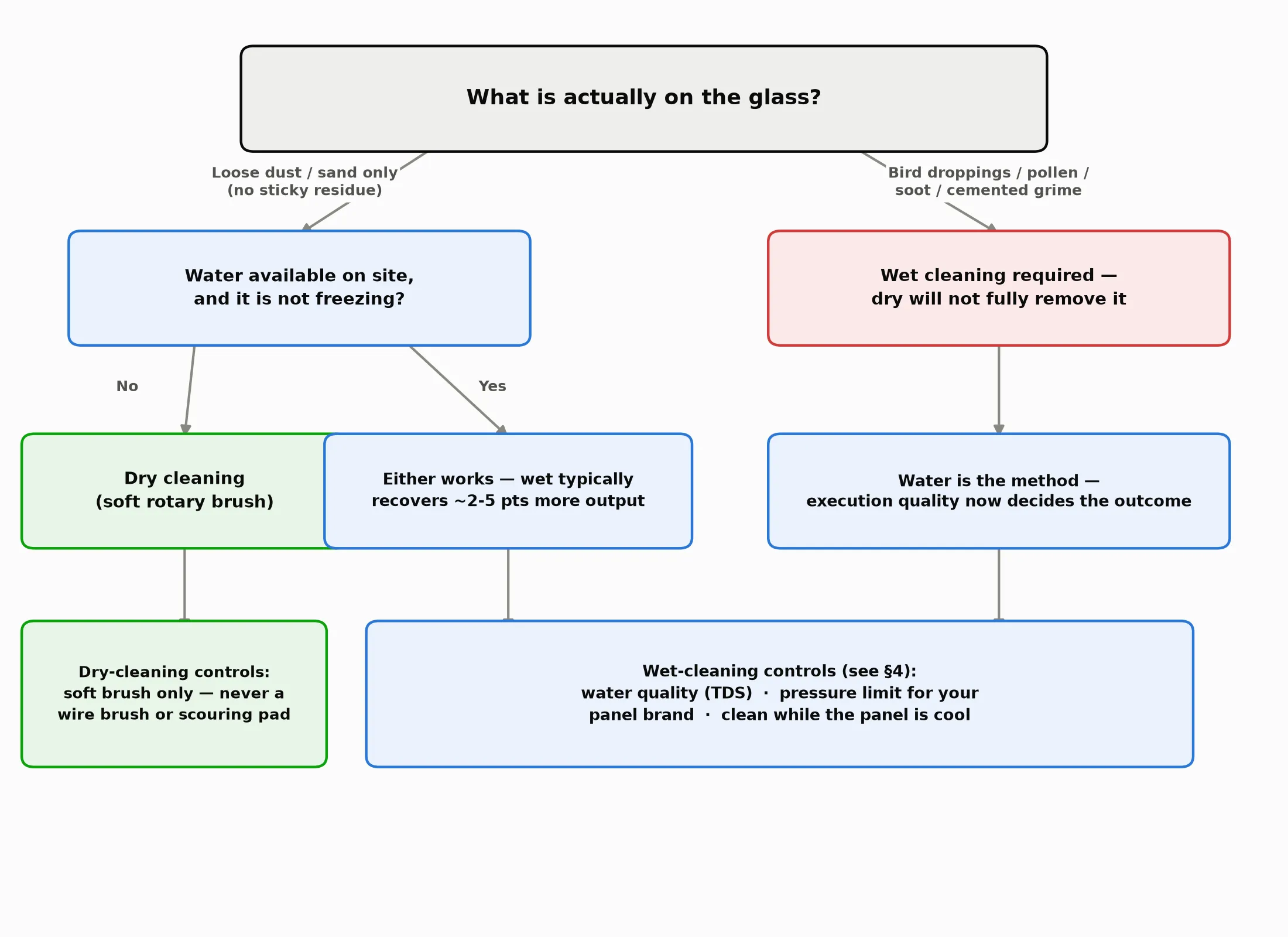
Putting Sections 1–4 together as a single path from soil type to execution controls:
The branch point is soil type, not preference. Water availability only matters on the loose-dust branch — anything sticky or cemented routes to wet cleaning regardless.
Identify what is actually on the glass: loose dust/sand, or something sticky, organic, or cemented.
Loose dust/sand, water available, site not freezing: either method works; wet typically recovers a few extra percentage points of output (§2).
Loose dust/sand, no water available, water-restricted, or freezing conditions: dry cleaning with a soft rotary brush.
Bird droppings, pollen, soot, or cemented grime, in any water situation: wet cleaning is required (§1).
Whichever branch you land on, apply the matching controls before you start — soft-brush-only for dry (§3), or water quality / pressure / panel temperature for wet (§4).
Frequently asked questions
Can you clean solar panels without water?
Yes, for loose dust and sand — a soft rotary brush removes it effectively dry. It will not remove bird droppings, pollen, soot film, or rain-cemented dust; those need water to soften and lift. Dry cleaning also carries a documented risk of scratching the anti-reflective coating if grit gets dragged across dry glass; see the next question.
Is dry cleaning bad for solar panels?
It can be, depending on tool and soil type. Industry-reported estimates put moderate scratching of the anti-reflective coating at roughly 2–5% efficiency loss, and severe scratching at up to 15% — both permanent, since the coating cannot be restored once damaged. The main cause is dragging grit or using the wrong tool (wire brushes, scouring pads) dry; a soft rotary brush used only on loose, non-abrasive dust carries substantially lower risk.
Can you pressure wash solar panels?
Only within limits that are much lower than a typical pressure washer’s output, and the limit is set by your panel manufacturer, not by general advice. Trina Solar specifies a maximum of 700 kPa (~101 psi) on front glass; JA Solar specifies under 690 kPa (100 psi) for ARC-coated glass; First Solar caps nozzle pressure at 35 bar (500 psi). Check your specific panel brand before using any powered sprayer, and use a soft brush head rather than a bare jet.
Will cold water crack a hot solar panel?
Yes — and the mechanism runs opposite to what is sometimes assumed: it is cooler water meeting sun-heated glass that causes thermal shock, not hot water on a hot panel. Panel surfaces can reach roughly 60°C in direct afternoon sun; water applied at that point is almost always the cooler side of the gap, and the resulting temperature differential can stress or crack the glass. Clean during early morning or overcast conditions instead of mid-afternoon.
Which WaterSprayElephant products support both dry and wet cleaning?
The G4 roller-brush machine and the R1 crawler robot both operate in wet or dry mode on the same unit. Switching to dry mode does not remove the soil-type logic in Section 1 or the scratch-risk considerations in Section 3 — it just means you are no longer spending water on soiling that did not need it.
Short answer: use a robot when the array is large, high or unsafe to walk, and use long-reach electric brushes when sites are smaller, scattered or need spot cleaning. Most operators end up with both — a robot for the open field and brushes for the edges. Here’s how to decide.
Where manual (long-reach brush) wins
Small and residential systems — for a rooftop or a 100–500 m² array, a single-head brush is light, cheap and precise.
Edges, odd shapes and obstacles — brushes reach the rows, corners and gaps a robot can’t.
Off-grid and remote sites — lithium versions run all day with no mains power, so there’s nothing to plug in.
Mixed throughput needs — a double-head or roller widens the sweep to 0.7 m for medium and larger sites without stepping up to a robot.
A long-reach electric brush needs no setup time — it wins on scattered, low-rise arrays.
Where a robot wins
Large area, fast — a crawler robot covers far more per hour than any hand tool, so labour per m² drops sharply.
Height and safety — it walks the array on its own, keeping crews off high or steep roofs; anti-drop edge detection stops it at gaps.
Repeatable, scheduled cleaning — consistent coverage every cycle, less dependent on how tired the crew is.
A crawler robot pays off where rows are long, continuous and cleaned again and again.
The real deciding factor: labour cost
On most sites the biggest cleaning expense isn’t water or equipment — it’s people and the time they spend. That’s why the comparison usually comes down to area per operator-hour. A hand brush covers a modest area; a wide electric brush covers more with the same person; a robot covers the most and can run with minimal supervision. The larger and dirtier the site, the more that difference compounds over a year of cleaning cycles.
A simple way to choose
Up to ~500 m², rooftop or scattered: single-head electric brush.
~500–6,000 m², routine soiling: double-head or roller brush.
Large, high or hard-to-reach arrays: crawler robot, with brushes for the edges.
Utility-scale ground farms: a robot built for long rows, backed by brushes.
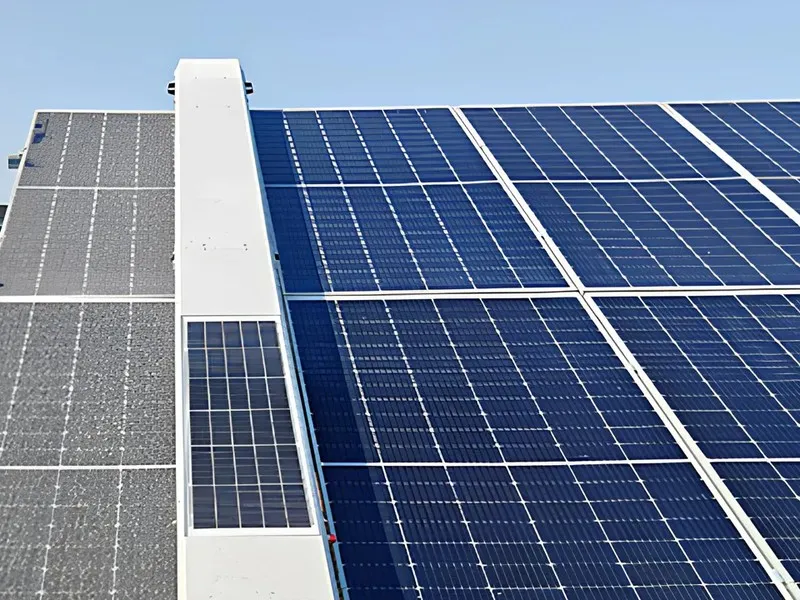
Dirty panels don’t fail loudly — they just quietly generate less every day. Depending on where your array sits, soiling can shave anywhere from a few percent to well over 20% off annual output, and in dusty or desert regions the losses climb fastest during exactly the sunniest, highest-value months.
What “soiling” actually is
Soiling is the build-up of dust, sand, pollen, salt, industrial fallout and bird droppings on the glass. It blocks light before it ever reaches the cells. Two things make it worse: low rainfall (nothing rinses the glass) and low tilt angle (dirt sits instead of sliding off). That’s why ground-mount farms in arid climates and low-slope commercial rooftops tend to suffer most.
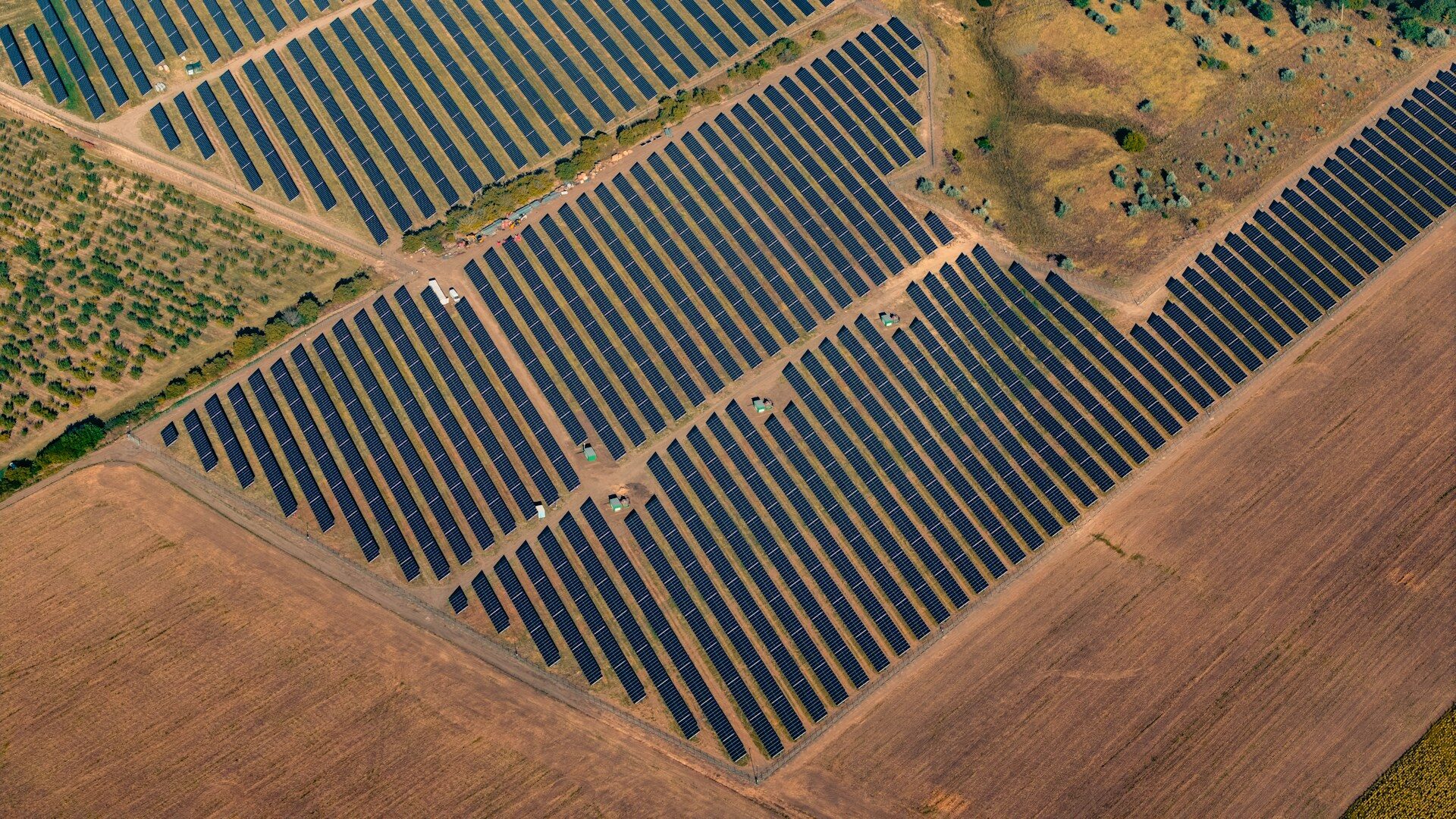
Soiling arrives quietly — you rarely notice the film until half a row has been cleaned.
How much output does it cost?
Field studies and site data across the industry generally point to a wide range:
Temperate, rainy regions: often ~2–7% average annual loss — rain does a lot of the cleaning for you.
Dry, dusty or agricultural regions: commonly 10–25% and rising through the dry season.
Desert and heavy-industrial sites: can exceed 25–30% at peak if left uncleaned, with daily loss rates that add up fast.
The exact figure depends on your climate, tilt, nearby dust sources and rain pattern — which is why measuring soiling on your own site (rather than guessing) is increasingly common on utility-scale projects.
When does cleaning pay for itself?
The economics are simple: if recovered generation over a cleaning cycle is worth more than the labour, water and equipment to clean, cleaning pays. On larger or dustier sites that math usually favours regular, scheduled cleaning — and it favours methods that cut the biggest cost, which is almost always labour.
That’s the case for mechanised cleaning. A long-reach electric brush lets one person cover far more area per hour than a hand tool, and a crawler robot removes people from the array entirely on large or hard-to-reach roofs.
Clean glass is the baseline every yield forecast quietly assumes.
The takeaway
Soiling is a recurring tax on your yield, heaviest where sunlight is most valuable. The question isn’t whether to clean — it’s how to clean often enough, cheaply enough and safely enough to stay ahead of it. If you’d like help sizing the right method for your site, tell us your site size, tilt and location and we’ll point you to the right configuration.