Short answer: use a robot when the array is large, high or unsafe to walk, and use long-reach electric brushes when sites are smaller, scattered or need spot cleaning. Most operators end up with both — a robot for the open field and brushes for the edges. Here’s how to decide.
Where manual (long-reach brush) wins
- Small and residential systems — for a rooftop or a 100–500 m² array, a single-head brush is light, cheap and precise.
- Edges, odd shapes and obstacles — brushes reach the rows, corners and gaps a robot can’t.
- Off-grid and remote sites — lithium versions run all day with no mains power, so there’s nothing to plug in.
- Mixed throughput needs — a double-head or roller widens the sweep to 0.7 m for medium and larger sites without stepping up to a robot.

Where a robot wins
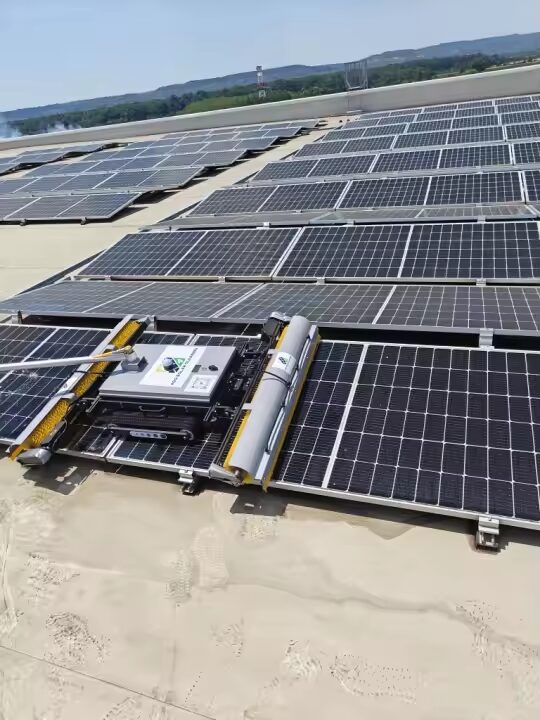
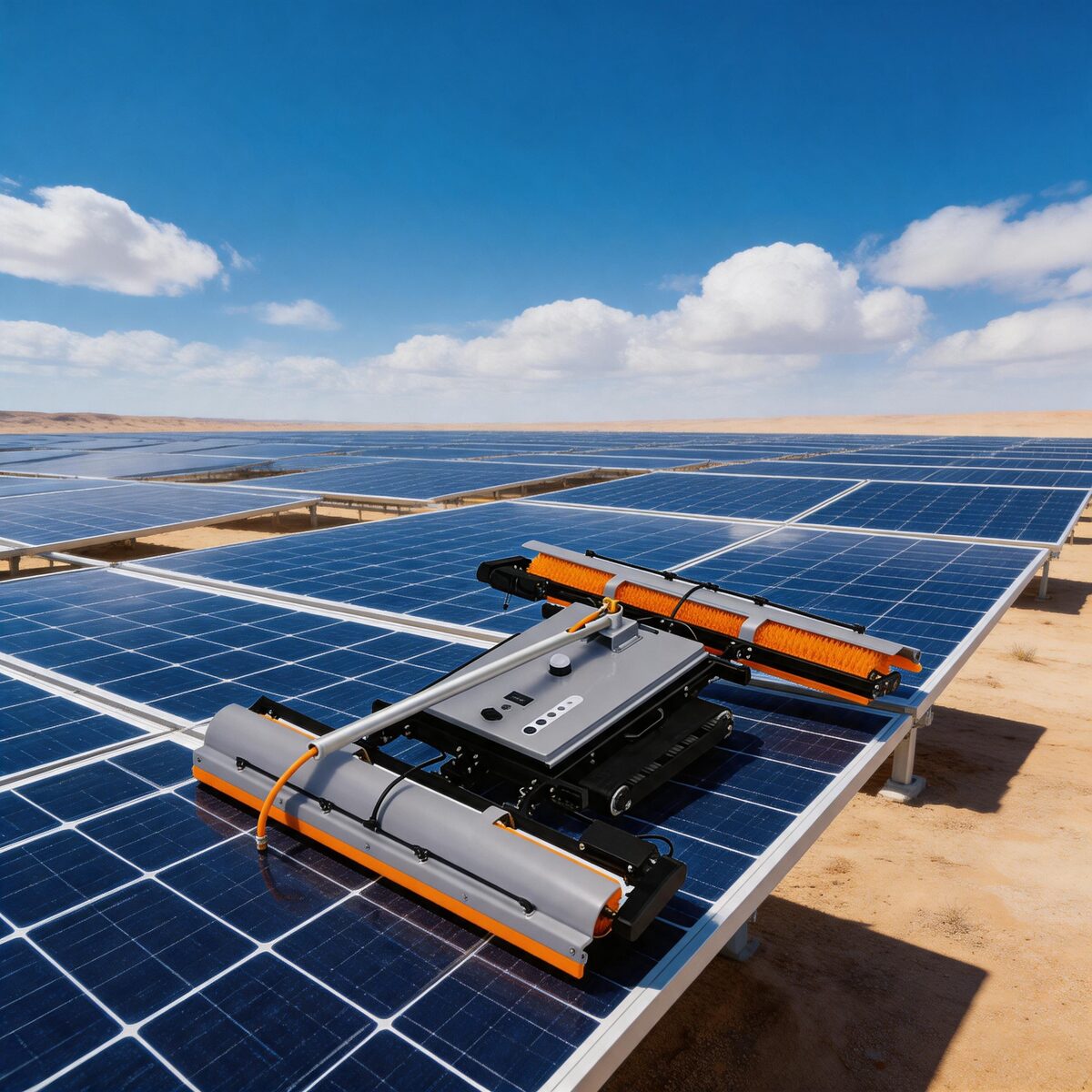
- Large area, fast — a crawler robot covers far more per hour than any hand tool, so labour per m² drops sharply.
- Height and safety — it walks the array on its own, keeping crews off high or steep roofs; anti-drop edge detection stops it at gaps.
- Repeatable, scheduled cleaning — consistent coverage every cycle, less dependent on how tired the crew is.
The real deciding factor: labour cost
On most sites the biggest cleaning expense isn’t water or equipment — it’s people and the time they spend. That’s why the comparison usually comes down to area per operator-hour. A hand brush covers a modest area; a wide electric brush covers more with the same person; a robot covers the most and can run with minimal supervision. The larger and dirtier the site, the more that difference compounds over a year of cleaning cycles.
A simple way to choose
- Up to ~500 m², rooftop or scattered: single-head electric brush.
- ~500–6,000 m², routine soiling: double-head or roller brush.
- Large, high or hard-to-reach arrays: crawler robot, with brushes for the edges.
- Utility-scale ground farms: a robot built for long rows, backed by brushes.
Not sure which line you fall on? Send us your site size, module tilt and location and we’ll recommend a matched setup — we build the full range, so the advice isn’t biased toward one machine.