Solar glass is tough, but it’s not scratch-proof — and a scratched panel loses output permanently. The good news: damage almost always comes from how panels are cleaned, not from cleaning itself. Follow a few rules and you get clean glass with zero risk. Here they are.
1. Use a soft, non-abrasive brush
Never use stiff industrial bristles, scouring pads or anything abrasive. Purpose-made solar brushes use soft synthetic filaments set into a smooth plate. Match the bristle to the job: softer nylon for gentle dry-dust sweeping, and a firmer PBT for wet cleaning of stubborn dirt — firm enough to lift grime, still safe on glass.
2. Don’t dry-scrub stuck-on dirt
The single biggest cause of scratches is pushing dry, gritty dirt or dried droppings across the glass. If it won’t sweep off dry, add water — water floats the grit away so the brush glides instead of grinding. Save dry cleaning for loose, powdery dust.
3. Watch your water quality
Hard tap water dries into mineral spots that look like dirt and tempt more scrubbing. On sensitive sites, feed the brush with reverse-osmosis (RO) water for a spot-free finish and less rework.
4. Skip the pressure washer
High-pressure jets can force water past the frame seals and stress the cells. Gentle, brush-fed water at low pressure cleans just as well without the risk.
5. Avoid extreme temperatures
Don’t clean panels that are scorching hot in midday sun — cold water on hot glass causes thermal stress. Early morning or evening is safer and more effective.
How our equipment is built for this
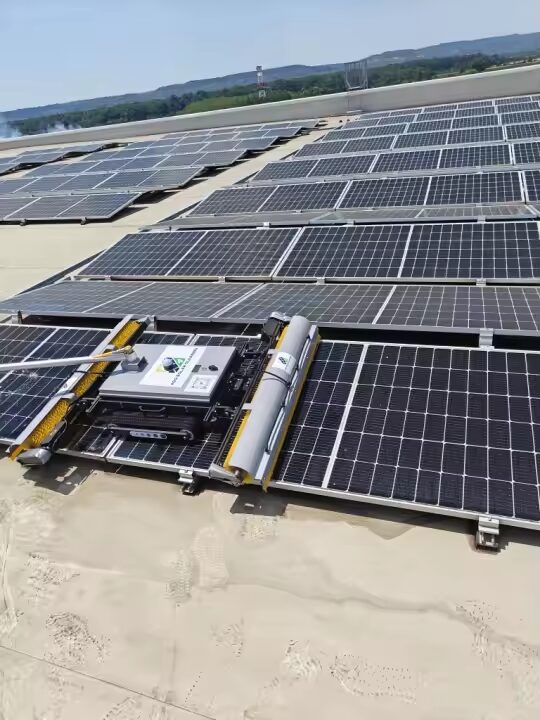
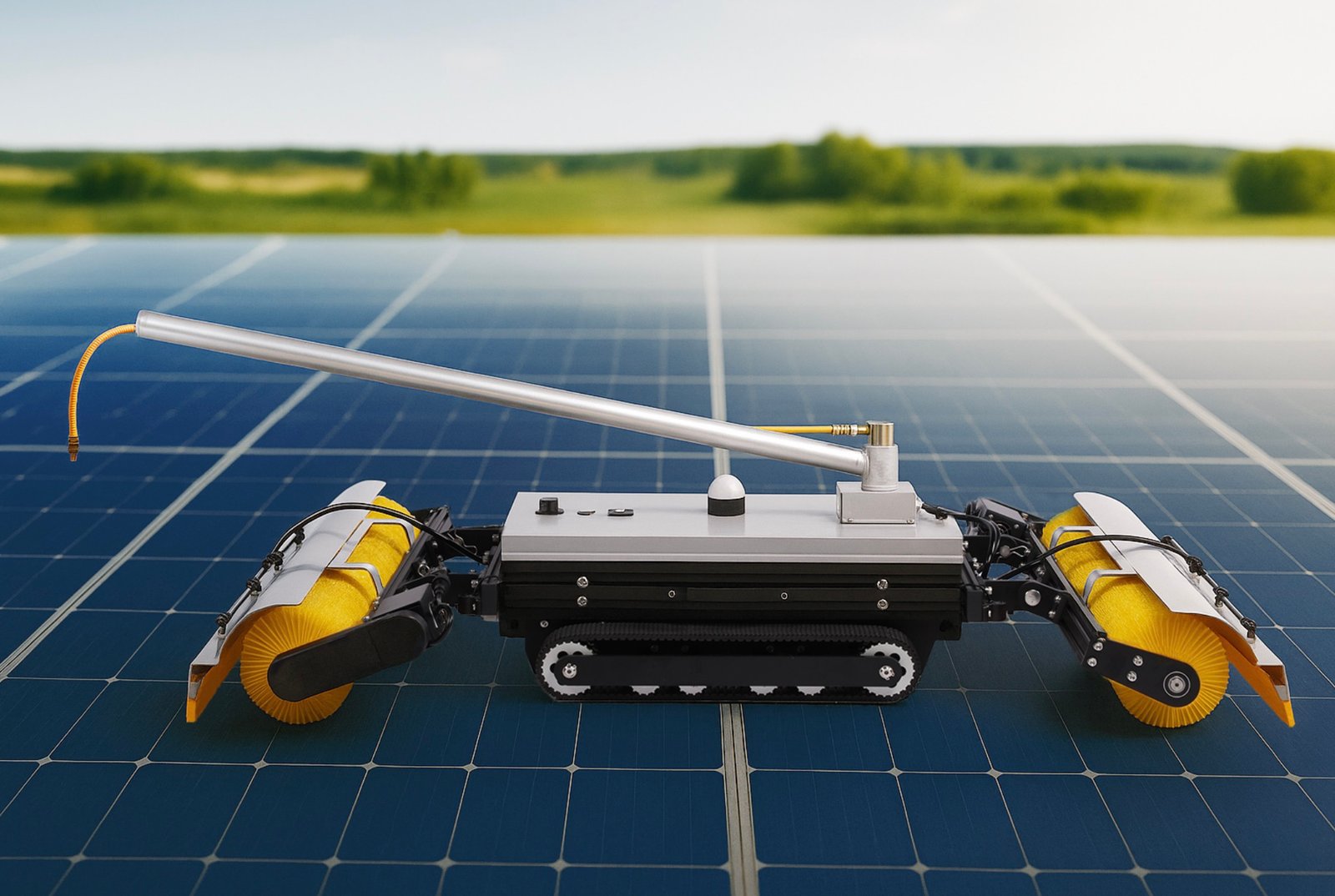
Our machines are designed around exactly these rules: soft nylon brushes for dry dust and firmer PBT for wet work, tufted (not woven) brush plates that won’t trap grit, water-fed heads that keep the glass wet, and insulated, non-conductive handles for safe work near live panels. Our crawler robot even carries both brush types for dry and wet cleaning.
Want help choosing a method and brush that’s safe for your panels? Tell us about your site and we’ll spec it.