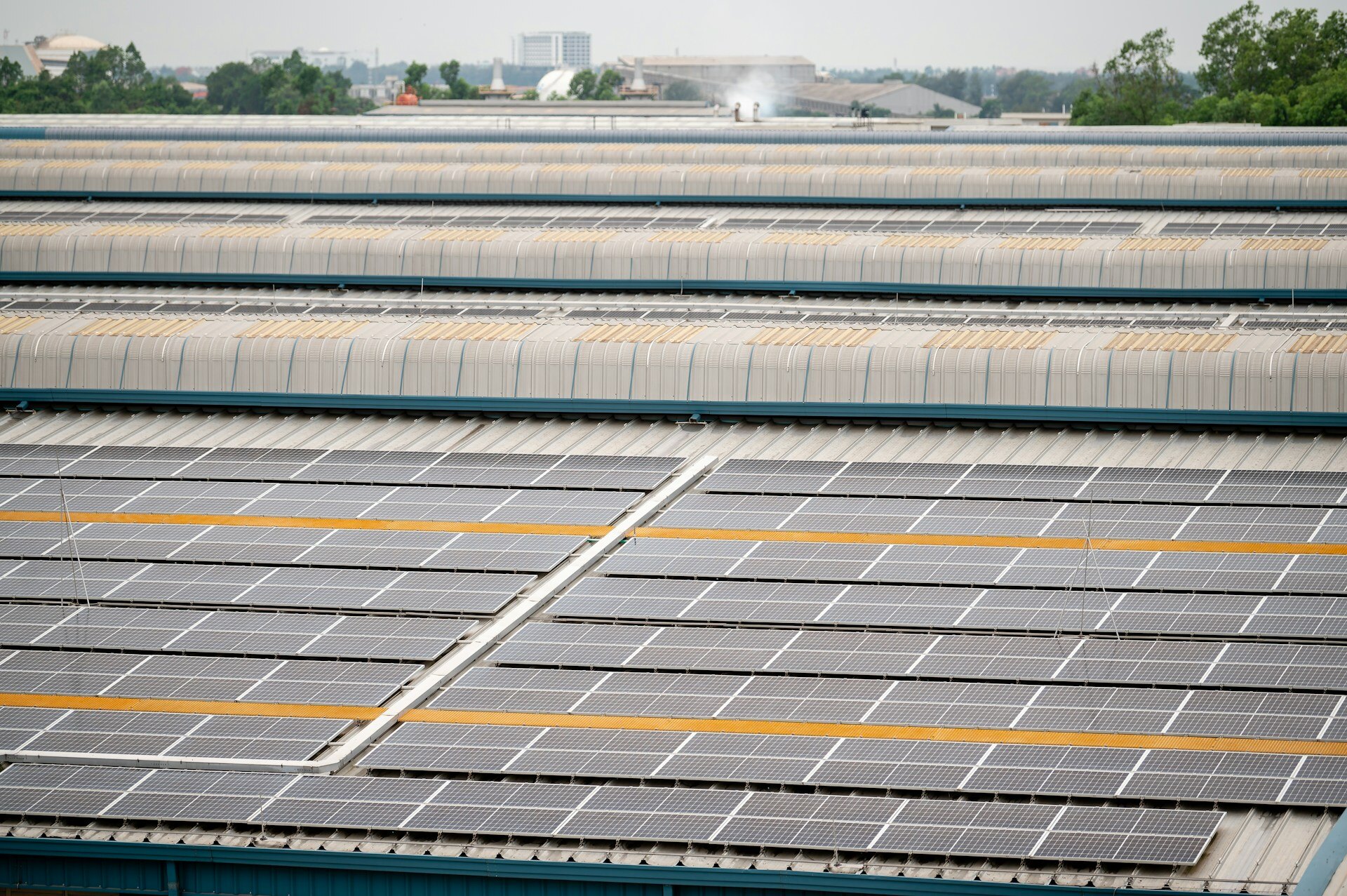
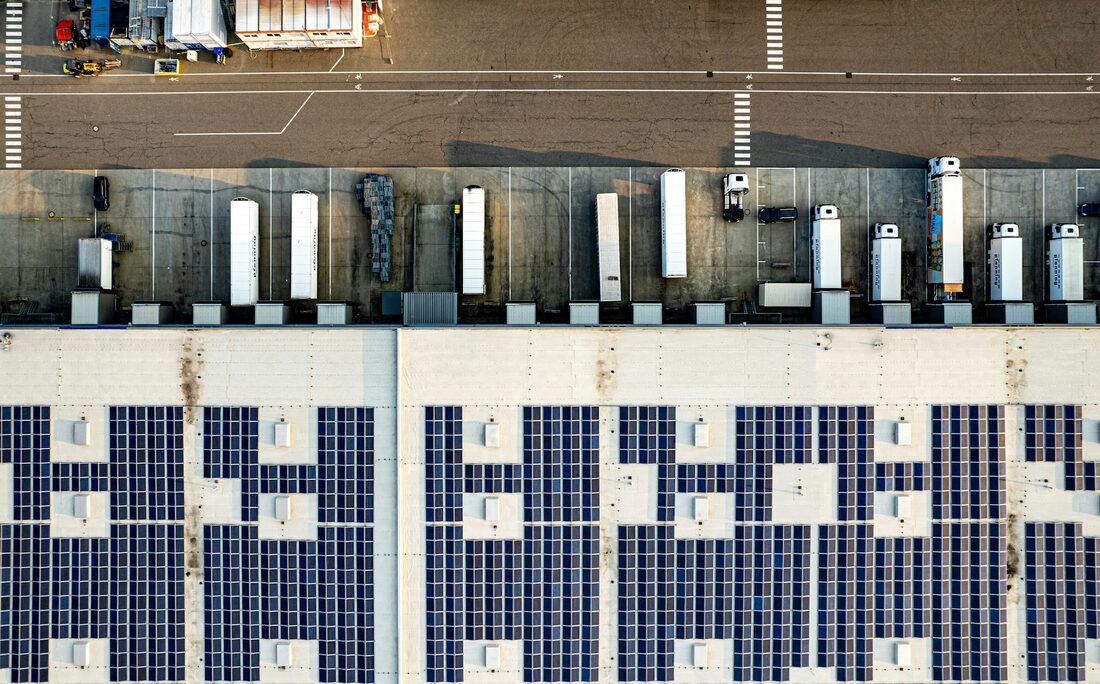
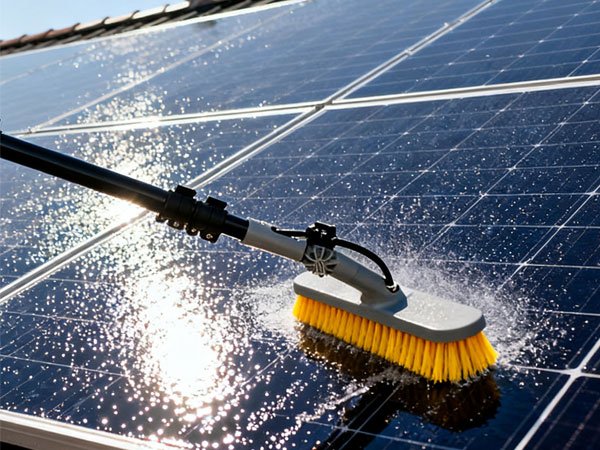
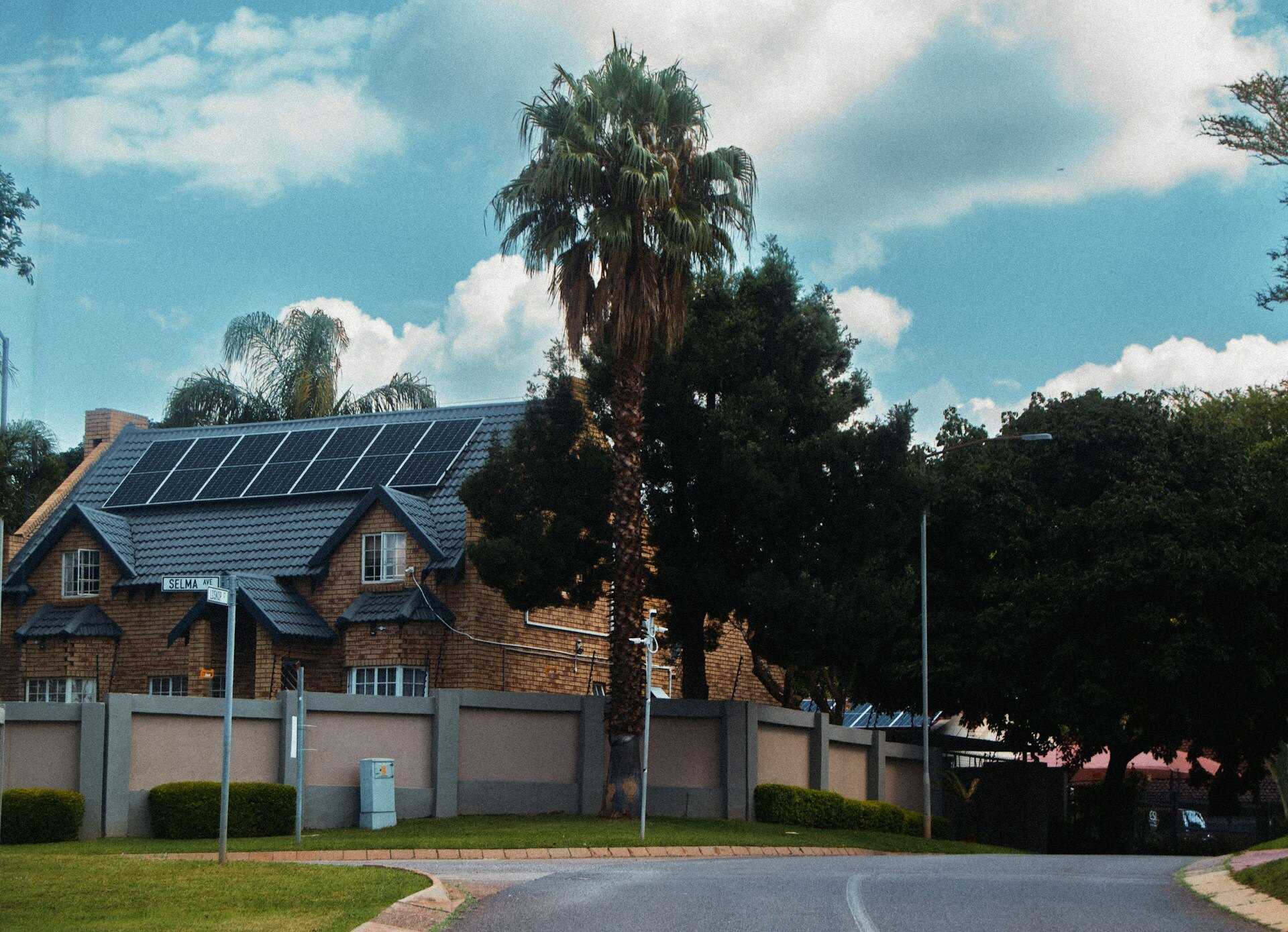
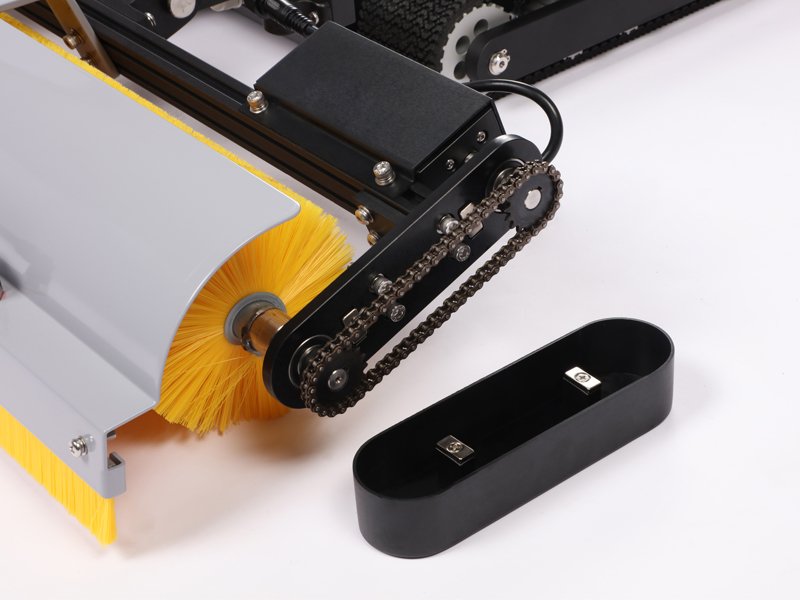
2026 has been a year of steady growth for WATERSPRAYELEPHANT. Our solar panel cleaning robots, electric brushes and dust sensors are now in the hands of installers and O&M teams in more than fifty countries across five continents — from rooftop projects in Europe to ground-mount sites in Africa and the Middle East, and across the Asia-Pacific region.
Several of these customers have come back for repeat orders and after-sales support, which is the feedback we value most: equipment that keeps working in the field, season after season.
Consolidated export shipments leaving for customers across five continents.
As a manufacturer that designs and builds in-house, we can tailor voltage, plugs and documentation to each market, and back every machine with English manuals and direct engineering support.
More field updates — and a few new models — are on the way. Watch this space.
In photovoltaic (PV) module cleaning, the brush disc is the point of contact where cleaning actually happens—yet its design is often overlooked. This article examines four critical design flaws common in conventional brush discs, and presents WaterSprayElephant’s next-generation brush disc engineered with integrated tufted bristle technology, optimized water dispersion, reinforced drive connection, and smooth-contour geometry. Laboratory and field tests confirm significant improvements in bristle retention, water efficiency, motor protection, and cleanability.
Introduction: The Brush Disc – A Critical Component in PV Cleaning Equipment
In the ecosystem of photovoltaic cleaning equipment, much attention is given to motors, batteries, and control systems. But the brush disc—the component that physically contacts the solar panel surface—is arguably the most consequential part of any cleaning brush, brush machine, or cleaning robot. A poorly designed brush disc not only reduces cleaning effectiveness but can also damage the very panels it is meant to protect, increase water consumption, and shorten equipment lifespan.
WaterSprayElephant, as a specialized manufacturer of professional solar panel cleaning equipment—including automatic cleaning robots, roller brushes, and single and double head brushes—has invested heavily in brush disc R&D. This article details our latest design innovations that address four fundamental pain points found in conventional brush discs across the industry.
Four Design Flaws in Conventional Photovoltaic Cleaning Brush Discs
1 Braided Bristle Construction: A Reliability Risk
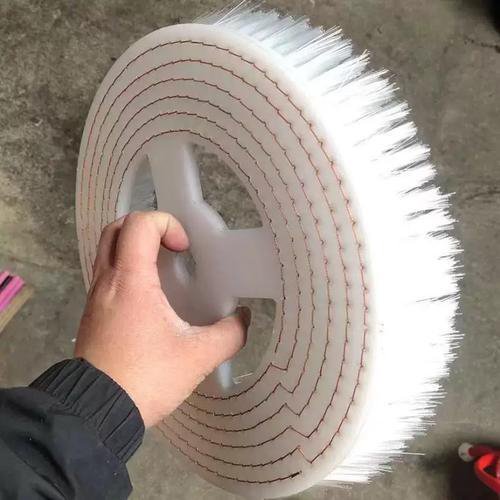
The vast majority of competing brush discs on the market today use a braided rope bristle construction rather than a tufted (planted) bristle process. While cost-effective to manufacture, this method introduces fundamental reliability problems:
When the braided rope frays or its binding loosens under sustained mechanical stress and water exposure, individual bristle strands detach from the disc.
Detached bristles can scratch or abrade the PV panel’s anti-reflective coating, permanently reducing energy yield.
The braided construction creates deep crevices within the bristle bundle that trap dust, grit, and moisture—compromising both hygiene and cleaning consistency.
As shown in the figure below:
2 No Integrated Water Dispersion: Excessive Water Waste
Most brush discs lack any form of built-in water dispersion mechanism. Water is simply discharged through a central opening and allowed to flow unevenly onto the panel surface:
Large volumes of water flow off the panel edges without contributing to cleaning effectiveness.
Inconsistent wetting means some areas are over-wetted while others remain dry, compromising cleaning uniformity.
For water-fed photovoltaic cleaning brush systems used in water-scarce regions such as the Middle East, this inefficiency is both economically and environmentally problematic.
As shown in the figure below:
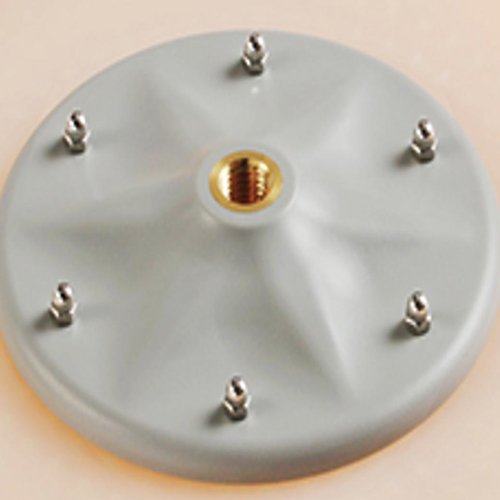
3 Undersized Drive Connection: Excessive Motor Load
The drive connection transfers rotational force from the motor to the brush disc. In many competing designs, this connector is undersized relative to operating torque demands:
A small connector creates a shorter effective lever arm, requiring the motor to deliver higher torque for the same brush speed and pressure.
The resulting increase in motor load accelerates wear on bearings and windings, shortening service life.
This is particularly problematic in heavy-soiling environments (desert, agricultural areas) where sustained cleaning torque is required.
As shown in the figure below:
4 Complex Surface Geometry: Dirt Accumulation
Conventional brush disc connectors and reinforcement ribs feature numerous sharp corners, recesses, and right-angle transitions:
Dust and grime accumulate in every corner during operation, creating a surface that is difficult to clean.
Over time, accumulated debris hardens and unbalances the rotating disc, introducing vibration and uneven wear.
The unsightly appearance of a dirt-caked brush disc undermines the professional image that solar O&M teams present to stakeholders.
Responding to these industry-wide shortcomings, our R&D team—led by domain experts in electromechanical engineering—developed a comprehensively redesigned brush disc. The new design represents a significant advancement in PV cleaning brush technology.
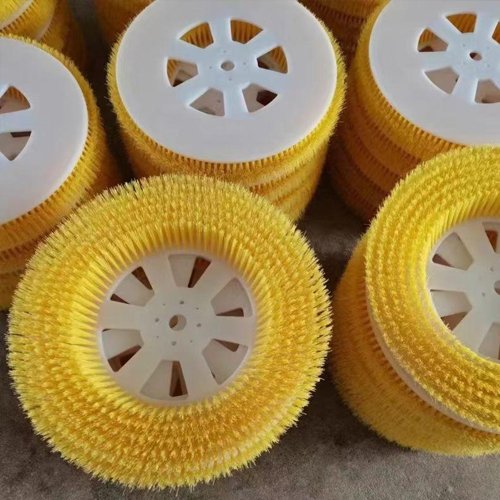
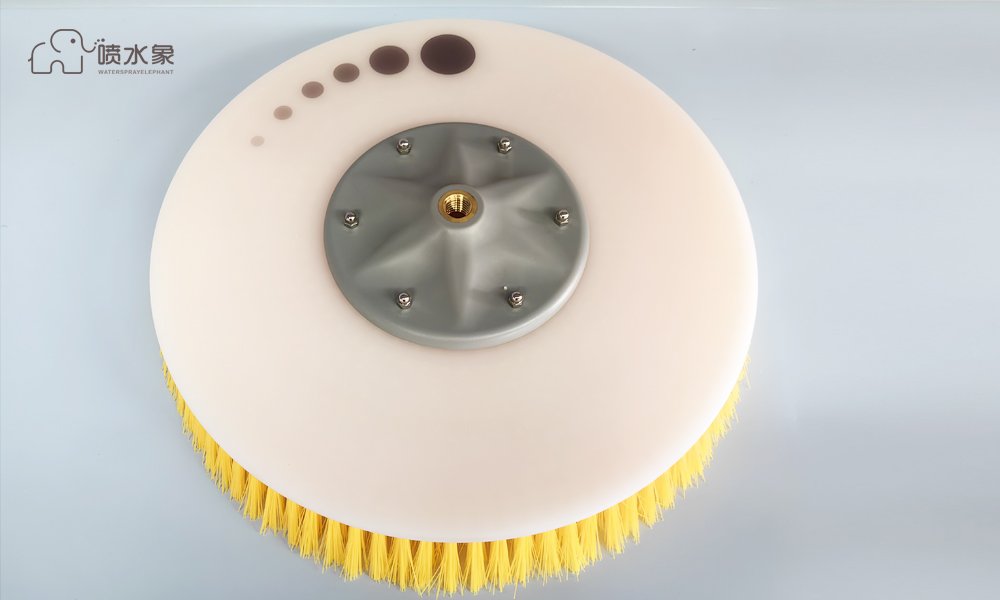
1 Integrated Tufted Bristle Technology
Our new brush disc employs an integrated tufted (planted) bristle process—the same high-precision technique used in premium toothbrushes. Individual bristle tufts are mechanically anchored into precision-drilled holes in the disc substrate, creating a permanent bond.
Bristle retention is dramatically improved: no shedding, no fraying, no bare spots—even after extended use.
The tufted structure eliminates the internal crevices that trap contaminants in braided designs.
Bristle density and stiffness can be precisely controlled across different disc zones for optimized cleaning performance.
This design is particularly effective for solar panel cleaning brush applications where consistent repeatable cleaning quality is essential.
As shown in the figure below:
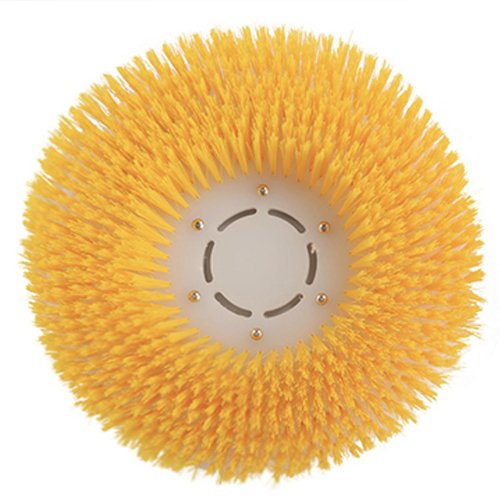
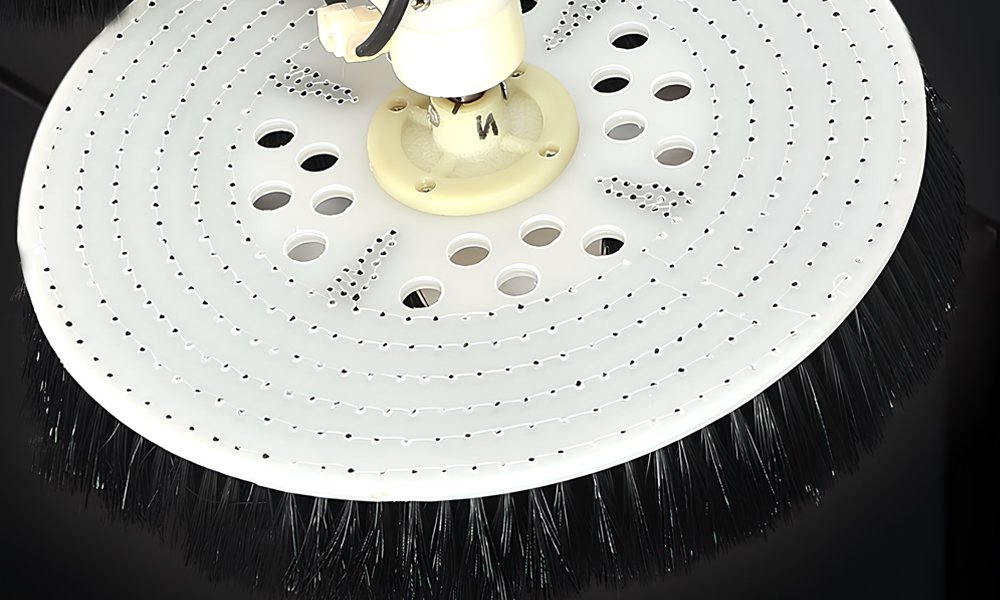
2 Engineered Water Dispersion Channels
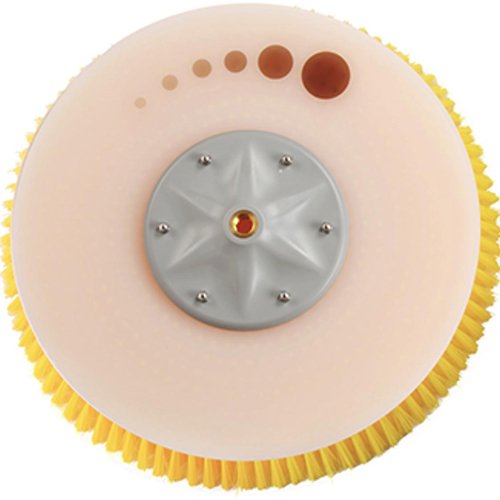
Six precision-machined dispersion slots are now integrated into the brush disc body, arranged uniformly around the central water inlet. As the motor rotates the disc, centrifugal force drives water evenly through these slots, creating a controlled uniform spray pattern across the entire cleaning width.
Water consumption is reduced by up to 30% compared to conventional central-discharge designs.
Uniform wetting ensures consistent cleaning results across the full panel surface.
The dispersion slots are self-cleaning—centrifugal force ejects debris during operation.
This innovation is especially valuable for automatic solar cleaner systems operating in water-constrained environments.
As shown in the figure below:
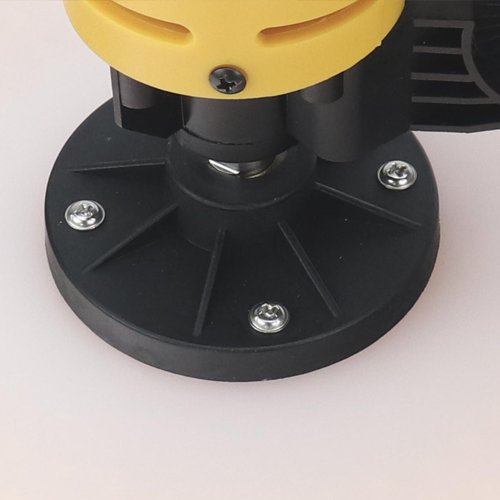
3 Enlarged Drive Connection for Optimal Torque Transfer
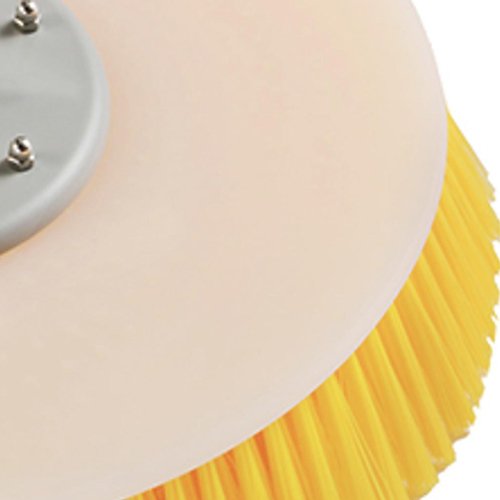
All reinforcement ribs and structural features employ smooth arc-shaped transitions rather than traditional right-angle corners:
Without sharp corners and recesses, dust and grime have no place to accumulate.
A quick water rinse restores the connector to a like-new appearance.
The smooth surface reduces aerodynamic drag during rotation, contributing to marginal energy savings.
Maintenance teams appreciate the visibly cleaner equipment—a small detail that reinforces a professional O&M standard.
As shown in the figure below:
Field Validation: Test Results
The redesigned brush disc has undergone extensive laboratory testing and field validation across multiple PV module cleaning system deployments:
Parameter
WaterSprayElephant Design
Conventional Design
Bristle Retention
Zero bristle shedding after 500 hours continuous operation
Up to 15% shedding in braided designs
Water Consumption
~30% reduction in water usage per panel, uniform spray
Uneven distribution, significant runoff waste
Motor Load
Measurable reduction in operating current
Higher current draw, accelerated motor heating
Cleanability
Simple water rinse restores original appearance
Requires manual scrubbing of corner deposits
Customer feedback has been consistently positive. Field operators report noticeably better cleaning results, reduced water refill frequency, and fewer brush disc replacements over the maintenance season. As one solar farm O&M manager commented: “The new brush disc design simply works better and lasts longer. We have standardized on WaterSprayElephant brush discs for all our PV cleaning operations.”
About WaterSprayElephant
WaterSprayElephant (Xiamen WaterSprayElephant Cleaning Technology Co., Ltd.) is a technology enterprise specializing in the R&D and manufacturing of intelligent cleaning solutions for photovoltaic modules. With many years of industry experience, an R&D team led by three PhD experts, and multiple patented technologies, our product portfolio spans:
Manual cleaning brushes and water spray brushes (manual cleaning brush, adjustable length cleaning brush)
Single head cleaning brush and double head cleaning brush systems
Roller brush cleaning machines for large-scale arrays
Tracked and hanging solar cleaning robots for rooftop and ground-mounted PV modules
PV dust measuring instruments and water filtration systems
Our solutions are deployed across 30+ countries in Europe, the Middle East, and Southeast Asia, consistently delivering a 5-20% improvement in PV energy yield through effective and reliable cleaning. We serve solar farm owners, O&M contractors, and EPC companies with customized solar cleaning solutions—whether for desert plants with heavy soiling, coastal installations requiring anti-corrosion protection, or flat single-axis tracker configurations.
Learn More
If you are responsible for solar farm maintenance and are evaluating ways to reduce O&M costs while increasing solar energy yield, contact our team to discuss your site conditions—panel type, soiling profile, tilt angle, and climate—and we will recommend the optimal cleaning configuration for your installation.
Visit: watersprayelephant.xyz
Email: service@watersprayelephant.com
Abstract: In the field of photovoltaic (PV) module cleaning, brush bristles are the “frontline workers” in direct contact with the glass surface. Subtle differences in their material, hardness, and manufacturing process directly determine PV cleaning effectiveness, module safety, and equipment longevity. Delving deep into the science of PV cleaning, WaterSprayElephant rejects the industry’s one-size-fits-all approach. We scientifically match PBT and Nylon materials to specific PV cleaning scenarios—dry cleaning, wet cleaning, and different types of stubborn soiling—and employ advanced integrated tufting technology. This achieves the perfect balance between PV cleaning power, module protection, and brush durability.
Effective PV module cleaning is far more than a simple “scrubbing” motion. With every rotation of the brush head, the material and properties of the bristles silently define the outcome: is it a thorough renewal of the power-generating surface, or does it risk scratching the glass? The crude and uniform bristle selection found in many PV cleaning tools on the market today has become a key bottleneck restricting PV cleaning quality and safety.
Three Major Limitations of Generic Market PV Cleaning Brush Bristles
Hardness Imbalance, Hidden Damage Risk: Many PV cleaning products, in pursuit of cleaning power, use excessively hard bristles. At high motor speeds, these bristles act like microscopic “sandpaper,” which can easily create micro-scratches on the PV module surface over time. These scratches not only affect aesthetics but also cause light scattering, leading to potential losses in solar energy yield.
Too Soft, Ineffective Against Stains: Conversely, bristles that are too soft prove inadequate when facing dried bird droppings, mud stains, or mineral deposits—stubborn soiling in PV cleaning. Cleaning effectiveness is compromised, forcing operators to clean repeatedly and reducing solar farm maintenance efficiency.
Single Material, Scenario Mismatch: A more common issue is the use of the same bristle type for both dry dust and sticky grime, for both dry and wet PV cleaning. This “one-brush-fits-all” strategy fails to adapt to complex and variable field conditions, inevitably resulting in suboptimal PV cleaning.
WaterSprayElephant’s Solution: Scientific Bristle Material Matching Based on PV Cleaning Scenarios
We believe bristles are not mere consumables but core components of precision PV cleaning tools. Our bristle selection is based on deep materials science and PV field condition research:
Dual-Material Strategy for Diverse PV Cleaning Challenges:
PBT (Polybutylene Terephthalate): Characteristically stiffer and offers good toughness. Ideal for wet PV cleaning scenarios and handling tenaciously adhered substances (e.g., dried bird droppings). We carefully select medium-hardness PBT bristles, ensuring powerful contaminant removal while minimizing the risk of PV module surface damage.
Nylon: Characteristically softer and extremely wear-resistant. Particularly suitable for dry PV cleaning scenarios, it gently sweeps away dust and sand particles, preventing dry, hard granules from “grinding” against the glass under the brush’s action. We typically select extra-soft nylon filaments with a diameter under 0.3mm for gentle yet effective PV cleaning.
Process Innovation, Phasing Out Obsolete PV Cleaning Brush Technology:
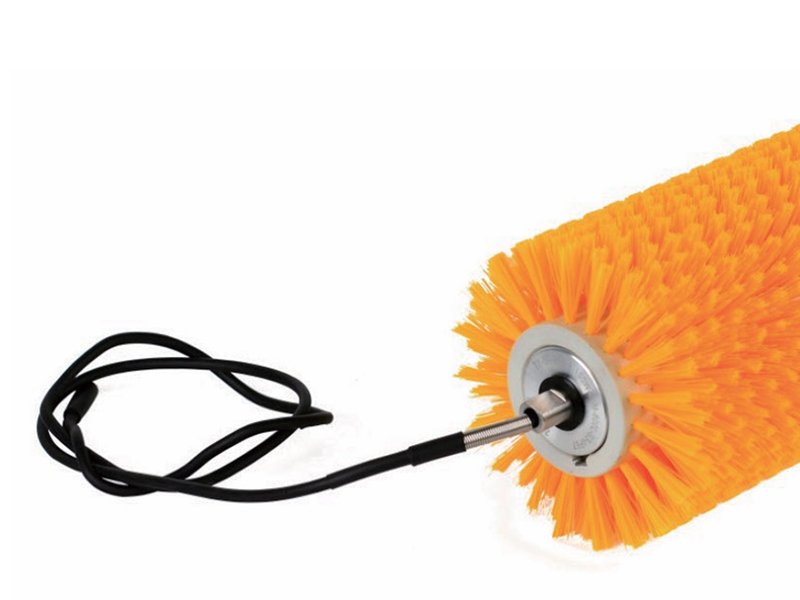
We have completely phased out older brush heads using the woven-cord process. In this process, the binding cord is prone to detachment, harbors dirt, has a short lifespan, and provides inconsistent PV cleaning results. As shown in the figure below:
We have fully adopted the advanced integrated tufting process. Each filament is securely and uniformly implanted into the brush head base, with no metal wires or woven fabric involved. This delivers unparalleled durability, consistent PV cleaning performance, and high reliability, completely eliminating the risk of debris detaching and contaminating the PV modules or equipment. The improved design is shown in the following figure:
Field Test Results: Precision Bristle Selection for Excellent PV Cleaning Performance
Tested in harsh environments such as desert power plants in the Middle East (dealing with fine sand) and coastal plants in Southeast Asia (dealing with salt residue), our scenario-based PV cleaning bristle solution has proven highly successful:
In dry cleaning mode, nylon bristles remove dust gently and efficiently, leaving the PV module surface clean and streak-free.
In wet cleaning and for tackling stubborn stains, PBT bristles demonstrate powerful PV cleaning capability, quickly restoring module surface clarity.
The integrated tufted brush heads maintain stable performance throughout their lifecycle, with no shedding or deformation, resulting in extremely low PV cleaning maintenance costs.
This embodies WaterSprayElephant solutions’ commitment to customized solar cleaning and smart O&M for photovoltaic systems.
About WaterSprayElephant
WaterSprayElephant is a technology company dedicated to the R&D and manufacturing of intelligent cleaning solutions for PV modules. We believe true efficiency innovation stems from a deep dive into every technical detail. From the bristle selection in our handheld cleaning brushes to the obstacle-crossing algorithms in our tracked cleaning robots and the system integration in our horizontal cleaning robots, we are committed to providing full-scenario, high-performance PV module cleaning systems. Our website: watersprayelephant.xyz
Our mission is to make PV cleaning labor easier and, through our expertise, help increase solar energy yield and reduce solar O&M costs, becoming a trusted efficiency innovation partner for our global clients.
Our Mission is to “Make PV Cleaning Labor Easier.”
Our Vision is to become the technology leader in enhancing photovoltaic power generation efficiency.
For solar farm operators and asset managers, dirty PV panels are one of the most overlooked causes of energy loss. Dust, dirt, bird droppings, sand, and pollen can reduce electricity generation by 20%–30% over time — cutting into your ROI without you even noticing.
In this article, we share practical, cost-effective solar panel cleaning and maintenance tips to maximize power output, extend panel lifespan, and optimize long-term operational efficiency.
How Much Energy Do Dirty Solar Panels Really Waste?
Many plant owners focus only on equipment costs, not the hidden losses from soiling. As a general industry estimate:
Light dust buildup: 5%–10% generation loss
Heavy dust, sand, or bird droppings: 15%–30% generation loss
Over months and years, this adds up to significant lost revenue. Proper cleaning is not an expense — it is one of the highest-return investments in solar plant management.
3 Practical Solar Panel Cleaning Tips
1. Choose the Right Cleaning Time
Clean in the early morning or late afternoon, when temperatures are mild and sunlight is low.
Avoid cleaning during midday heat, as rapid temperature changes may stress PV panel glass and encapsulation.
Adjust frequency seasonally: increase cleaning cycles during dusty or dry seasons, and inspect carefully after rain to remove residual mud.
2. Select the Most Efficient Cleaning Method
Manual cleaning: Suitable for small or easily accessible installations, but labor-intensive, slow, and carries safety risks.
Intelligent automated cleaning: Ideal for large-scale ground-mounted plants, commercial rooftops, and remote solar farms.
At Water Spray Elephant, our intelligent PV cleaning systems — including automated cleaning robots and purpose-designed cleaning brushes — provide consistent, non-damaging cleaning performance. They operate without manual intervention, reduce labor costs, and ensure stable, high-efficiency power generation year-round.
3. Regular Inspection Extends Service Life
Along with cleaning, perform routine checks on:
Panel surfaces for cracks, hot spots, or coating damage
Frame conditions and sealing integrity
Cable and junction-box health
Small issues caught early prevent costly failures and extend the operational life of your PV system.
The same three rules apply whether it is one rooftop or a hundred megawatts.
About Water Spray Elephant
Water Spray Elephant is a technology-driven enterprise dedicated to the R&D and manufacturing of intelligent photovoltaic (PV) module cleaning solutions.Through our innovative cleaning systems, we significantly improve the power generation efficiency of solar power stations and have established ourselves as a global pioneer in the evolution of PV operation and maintenance efficiency.
Abstract: In photovoltaic module cleaning operations, the transmission system of a handheld cleaning brush directly determines the equipment’s durability and maintenance costs. Traditional chain drive systems conceal risks of failure and demand frequent upkeep. Embracing an ethos of engineering innovation, WaterSprayElephant has completely abandoned the chain, pioneering a direct-drive solution that integrates the motor into the heart of the brush head. This not only eliminates the inherent failure points of chains but also elevates reliability, quiet operation, and low maintenance to an entirely new level, delivering on the promise of “making O&M easier” through solid mechanical innovation.
The handheld brush is a vital tool for addressing localized soiling or performing detailed cleaning across various PV arrays. However, the reliability of its core transmission mechanism has long been a critical factor affecting user experience and total cost of ownership. The “motor + chain” drive system relied upon by many traditional devices reveals its inherent design limitations under the demanding conditions of high-intensity, prolonged field operations.
The Dual Constraints of Traditional Chain Drive Systems
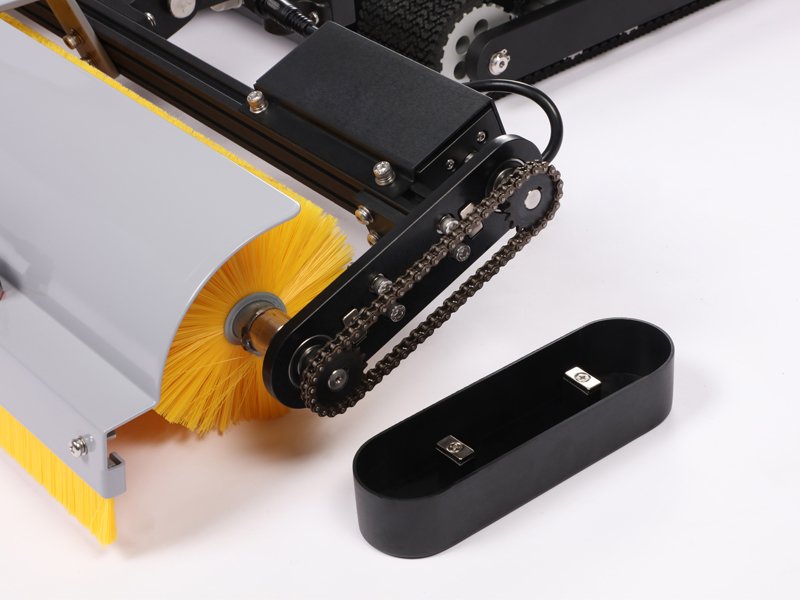
1. Risk of Breakage, A Hidden Threat to Operations: Most brushes use a single motor to drive the brush head rotation via a chain. Under prolonged, high-speed, and high-load operating conditions, the chain and its connectors endure continuous stress, making them prone to loosening, stretching, and even sudden breakage. This type of mechanical failure not only halts cleaning work but, due to inconvenient repairs, directly impacts a plant’s maintenance schedule, keeping overall failure rates undesirably high.
2. Noise, Wear, and the Constant Burden of Maintenance: Chain drives are not sealed, clean systems. They require operators to regularly apply lubricant to function properly. When lubrication is insufficient or the grease dries out, significant friction noise occurs. More critically, this accelerates the mechanical wear of the chain and sprockets, creating a vicious cycle of “inadequate lubrication → increased wear → higher risk of failure,” adding an unnecessary burden to routine maintenance.
WaterSprayElephant’s Innovative Solution: The Built-in Motor, A Direct-Drive Revolution
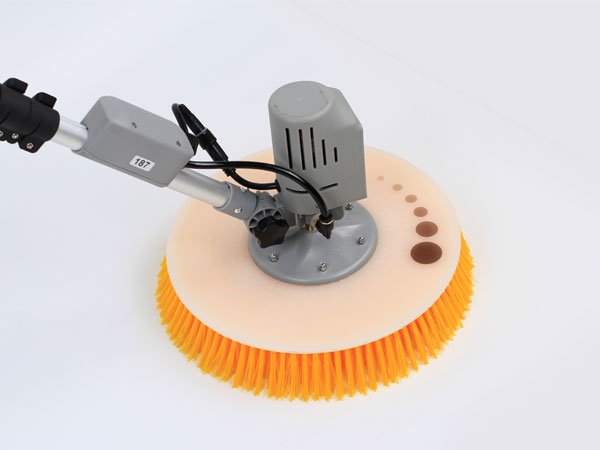
To solve these issues at their root, WaterSprayElephant’s R&D team reimagined the power architecture of the cleaning brush. We decisively moved away from complex intermediate transmission components, introducing the revolutionary motor-direct-drive integrated brush head:
* Simplicity Equals Reliability: We integrate a high-performance motor directly and precisely into the center of the rotating brush head. The motor’s output shaft is unified with the brush head’s load-bearing structure, enabling zero-loss, zero-lag direct power transmission from the motor to the bristles.
* Eliminating the Chain, Eradicating the Pain Points: This design completely does away with the traditional assembly of chains, sprockets, tensioners, and other transmission components. The equipment no longer contains mechanical links that can loosen or break, and it eradicates at the source the noise and wear caused by lubrication issues.
The improved design is shown in the following figure:
Field Verification: More Reliable, Quieter, and Easier to Maintain
This direct-drive design has passed rigorous laboratory endurance tests and field validation under real operating conditions. Results show:
* A Leap in Reliability: By eliminating chain breakage as a primary failure mode, the equipment’s mean time between failures (MTBF) is significantly extended, greatly enhancing the continuity and predictability of maintenance work.
* Exceptionally Quiet Operation: The direct-drive structure operates smoothly, with markedly reduced noise levels, improving the worker’s environment.
* Near-Zero Maintenance: Users no longer need to worry about chain lubrication, drastically simplifying daily maintenance and truly achieving the convenience of “ready to use, ready to go.”
This innovation is a microcosm of WaterSprayElephant’s philosophy of smart O&M for photovoltaic systems, making solar farm maintenance simpler and more reliable.
About WaterSprayElephant
WaterSprayElephant is a technology enterprise dedicated to the R&D and manufacturing of intelligent cleaning solutions for PV modules. Through continuous technological innovation, we provide solutions that significantly enhance the power generation efficiency of PV power plants, striving to become a global efficiency innovator in the PV O&M field.
Our product matrix covers full-scenario PV module cleaning systems, from handheld cleaning brushes and tracked cleaning robots to horizontal cleaning robots. Whether it’s a wear-resistant model for solar cleaning in desert plants or an anti-corrosion design for coastal areas, we are committed to providing customized solar cleaning solutions to help our global clients increase solar energy yield and reduce solar O&M costs.
Our Mission is to “Make PV Cleaning Labor Easier.”
Our Vision is to become the technology leader in enhancing photovoltaic power generation efficiency.
For operation and maintenance teams at PV power plants worldwide, module cleaning is a crucial routine for ensuring energy yield. However, in scenarios where handheld cleaning equipment is widely used, certain long-standing design shortcomings inadvertently increase operator burden and risk while reducing overall O&M efficiency.
The Three Major Efficiency and Experience Bottlenecks of Traditional Handheld Cleaning
Inefficient Back-and-Forth Movement
Operators often face this frustrating scenario: to start or stop cleaning, they must walk back and forth between the modules and the water/power source to manually switch the pump and power. This unnecessary movement is especially time-consuming across large arrays, significantly diluting productive work time.
Fatiguing Load-Bearing Work
While battery-powered devices offer mobility, their heavy battery packs are typically carried on the worker’s back. During prolonged operations under the sun, workers endure not only heat reflected from the modules but also additional heat generated by the battery against their back. This is very easy to leads to fatigue and even heatstroke, impacting work safety and continuity.
Power Adaptation Safety Hazards
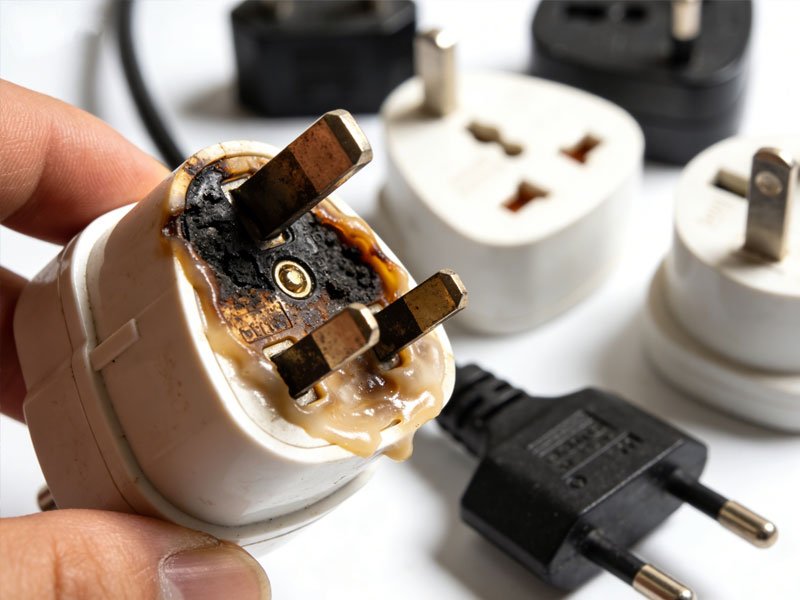
Faced with diverse global voltage standards and socket types, solutions relying on universal travel adapters carry inherent risks like poor contact and overheating, introducing significant fire hazards to the site.
Addressing these pain points, WaterSprayElephant’s engineering team started from the user experience and systematically innovated the handheld cleaning brush, launching a solution integrated with smart remote control:
One-Touch Remote, Control in Hand
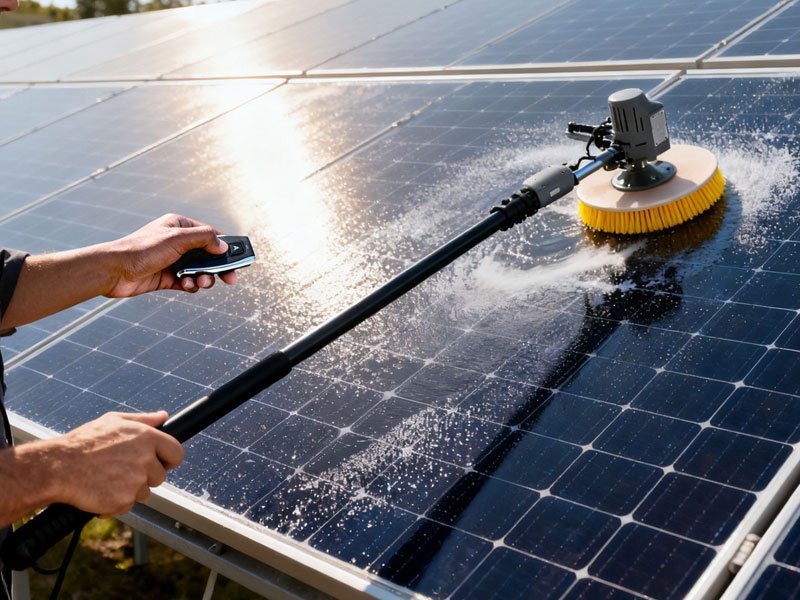
We put control back in the worker’s hands. Using a lightweight, waterproof remote, operators can directly and safely start/stop the water and power supply from their cleaning position. This eliminates pointless walking, allowing time and energy to focus entirely on the cleaning task.
Battery on the Ground, Work Unburdened
We revolutionized the design by relocating the lithium battery pack from the worker’s back to an integrated box at the water source. Workers only need the lightweight brush head and remote, completely freeing them from the weight and back heat, greatly improving comfort and enabling sustainable work sessions.
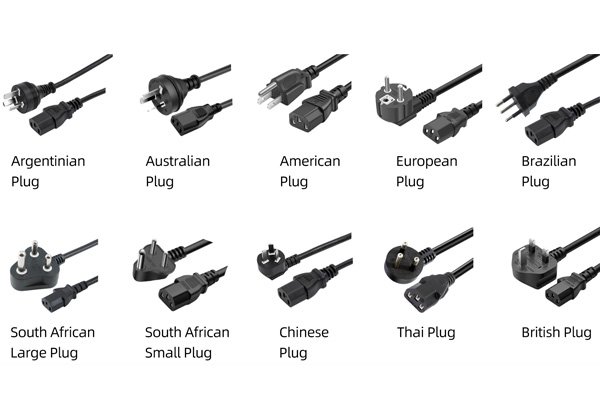
Standard Plugs, Safe & Compliant
We offer integrated power plugs that comply with the national standards of target markets, eliminating unstable adapters. This ensures electrical connection safety and reliability at the source, meeting compliance requirements in different regions worldwide (such as the Middle East, Europe, and Southeast Asia). This is particularly important, as safety is always the core concern of WaterSprayElephant company.
Field Test Verification: Easier and More Efficient
This design has been validated in multiple field scenarios. Feedback from O&M personnel indicates the new device is intuitive and easy to use, significantly reducing physical strain. Estimated single-operator daily cleaning efficiency has increased by over 20%. The convenience and safety brought by remote control have been highly praised, truly achieving the goal to “Easier for solar cleaners.”
About WaterSprayElephant
WaterSprayElephant is a technology company dedicated to the R&D and manufacturing of intelligent cleaning solutions for PV modules. We not only provide innovative PV module cleaning systems but are also committed to becoming a global efficiency innovator in the PV O&M field.
Our product portfolio covers full-scenario solutions from handheld cleaning brushes and tracked cleaning robots to horizontal cleaning robots, aiming to help power plants increase solar energy yield and effectively reduce solar O&M costs through automation and smart technology. We understand the importance of customized solar cleaning and can provide tailored designs for special environments like solar cleaning for desert plants or anti-corrosion cleaning robots for coastal areas.
Our Mission is to “Easier for solar cleaners.”
Our Vision is to be a technological leader in improving the efficiency of photovoltaic power generation